
Rajiv Chowk, Delhi: Key Facts, History & Connectivity
If Delhi has a heartbeat, it echoes loudest at Rajiv Chowk — the grand circular landmark better known to millions as Connaught Place (CP). As Delhi’s most iconic commercial and cultural address, Rajiv Chowk is where history meets hustle: where colonial colonnades shade global fashion brands, where street-food vendors stand beside fine-dining restaurants, and where India’s busiest metro interchange sits quietly underground, ferrying over two lakh commuters every single day.
Whether you are a first-time visitor trying to navigate the capital, a shopper looking for the best of Delhi’s markets, a food lover exploring the city’s most storied dining institutions, or a history enthusiast tracing Lutyens’ New Delhi — Rajiv Chowk is where every Delhi experience begins. This comprehensive guide covers everything from its history and architecture to metro connectivity, shopping, dining, nearby attractions, and practical travel tips.
Rajiv Chowk Quick Overiew
Before diving into the details, here is a complete at-a-glance reference table covering all the essential facts about Rajiv Chowk — updated for 2026.
|
Key Detail |
Information |
|
Official Name |
Rajiv Chowk (popularly known as Connaught Place / CP) |
|
Location |
Block B, Connaught Place, New Delhi – 110001 |
|
️ Built |
1929 – 1933 | Architect: Robert Tor Russell |
|
Renamed |
1995, in honour of PM Rajiv Gandhi |
|
️ Architecture |
Georgian Neoclassical — modelled on Royal Crescent, Bath, England |
|
⭕ Layout |
3 concentric circles (Inner, Middle, Outer) + 7 radial roads |
|
Metro Station |
Rajiv Chowk Station — Blue Line & Yellow Line interchange (opened July 3, 2005) |
|
Daily Ridership |
~2,16,000 passengers/day (2nd busiest in Delhi Metro network — Oct 2023) |
|
⏰ First / Last Train |
First: 5:50 AM | Last: 11:52 PM (Yellow Line to Samaypur Badli) |
|
Station Area |
~39,503 sq ft (3,669.9 m²) | 4 platforms | 8 entry/exit gates |
|
Commercial Rank |
9th most expensive office location in the world (2018 — $1,650/sq m/yr) |
|
️ Shop Rents (2026) |
₹300 – ₹700 per sq ft per month (33% jump recorded in 2023) |
|
✈️ Nearest Airport |
IGI Airport — ~12.8 km | ~30 min via Airport Express + metro |
|
Nearest Railway |
New Delhi Railway Station — ~2.4 km | ~15 min walk or auto |
|
️ Central Park Flag |
60 ft wide × 90 ft long Indian Tricolour — one of India’s largest flagpoles |
|
Cultural Events |
Urdu Heritage Festival, Delhi Youth Festival, New Year & Diwali celebrations |
History of Rajiv Chowk: From Colonial Blueprint to Capital Icon
The story of Rajiv Chowk begins in the early 20th century, as the British colonial government laid the foundation of New Delhi as the new capital of India. As part of the grand Lutyens’ Delhi plan, a central commercial hub was envisioned that would serve colonial administrators, thriving businesses, and a growing urban population. That vision took physical form between 1929 and 1933, when architect Robert Tor Russell completed Connaught Place — named after Prince Arthur, the 1st Duke of Connaught, Queen Victoria’s third son, who had visited India in 1921.
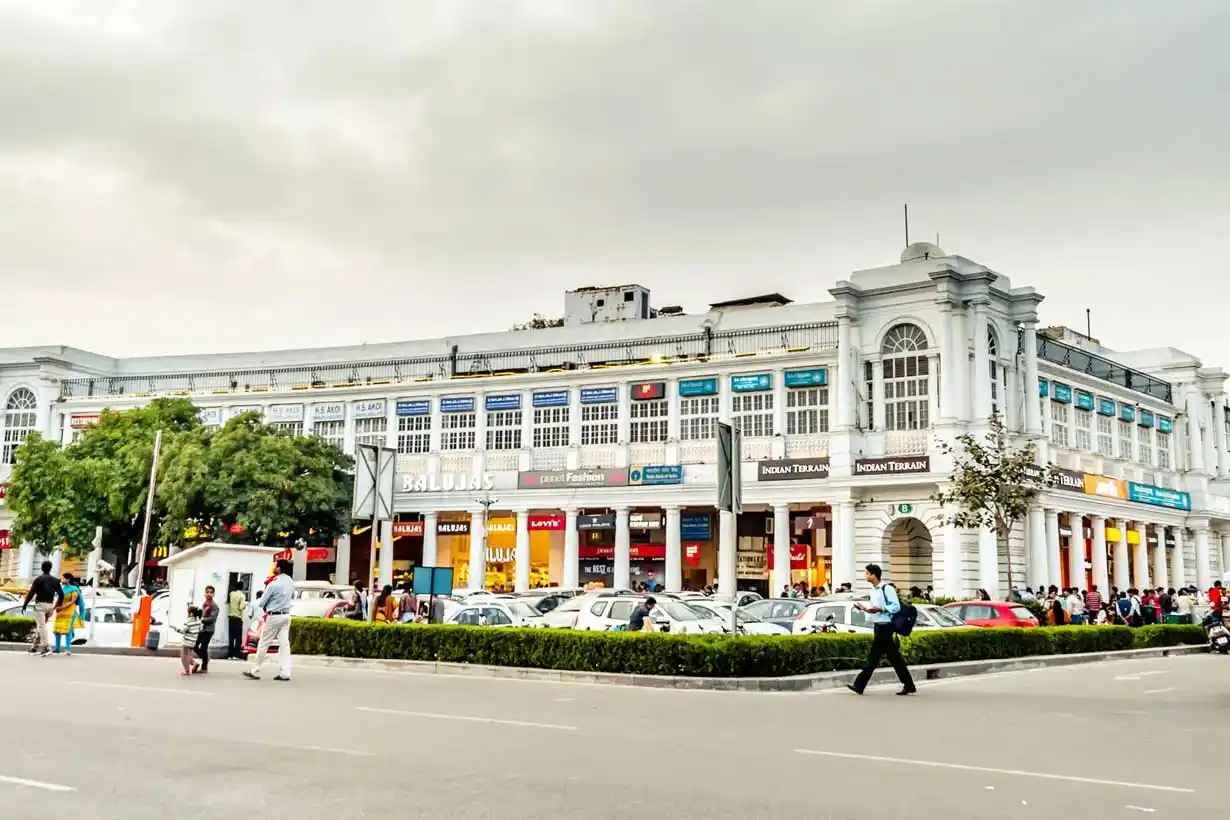
The architectural style is Georgian Neoclassical, modelled after the Royal Crescent in Bath, England — designed by John Wood the Younger. Two sweeping concentric circles of white-painted, colonnaded buildings were arranged around a Central Park, with seven radial roads extending outward like spokes of a wheel. The ground floors were designed for commercial establishments; the first floors housed offices and residences.
In 1995, the area was officially renamed Rajiv Chowk in honour of former Prime Minister Rajiv Gandhi. Despite the official name, Delhiites and visitors alike continue to refer to the area affectionately as CP or Connaught Place in everyday life.
Architecture & Layout: The Georgian Crown of New Delhi
Rajiv Chowk’s circular layout is its most distinctive feature and its greatest architectural achievement. The design consists of three concentric rings — the Inner Circle (officially Rajiv Chowk), the Middle Circle, and the Outer Circle (officially Connaught Circus / Indira Chowk) — connected by seven radial roads.
• Inner Circle: Home to premium branded retail stores including Nike, H&M, Zara, Fabindia, and Khadi India. The arcaded walkways provide shade and a pleasant pedestrian experience.
• Middle Circle: Houses corporate offices, banks, currency exchange counters (Thomas Cook, ATW Exchange), PVR Cinemas, and popular dining outlets.
• Outer Circle (Connaught Circus): Lined with hotels, restaurants, bars, and notable landmarks including the historic Regal Building — now home to Madame Tussauds Delhi, which opened December 1, 2017.
• Central Park: The green heart of Rajiv Chowk, rebuilt in 2005–06 after the metro station was constructed below. Features one of India’s largest flagpoles — a 60 ft wide, 90 ft long Tricolour — and hosts regular cultural events throughout the year.
A striking counterpoint to CP’s colonial whites is the Jeevan Bharti Building — designed by architect Charles Correa with red sandstone and glass, inspired by the Red Fort — which towers over the area and remains an architectural conversation piece since its completion in 1986.
Rajiv Chowk Metro Station: Delhi’s Premier Transit Hub
Built entirely underground beneath Central Park, Rajiv Chowk Metro Station is the crown jewel of the Delhi Metro network. Opened on July 3, 2005, it serves as the critical interchange between the Yellow Line (Line 2) and the Blue Line (Lines 3 & 4) — making it the most strategically positioned station in the entire DMRC network.
As of October 2023, Rajiv Chowk is the second busiest station in the Delhi Metro network with a daily ridership of approximately 2,16,000 passengers. The station covers 39,503 square feet, has four platforms, eight entry/exit gates, and is equipped with escalators, lifts, smart card recharge kiosks, ATMs, food outlets, Sulabh restrooms, and 24/7 CCTV surveillance.
|
Line |
Route |
Key Destinations |
|
Yellow Line (Line 2) |
Samaypur Badli → HUDA City Centre, Gurugram |
Kashmere Gate, Chandni Chowk, New Delhi Rly, Hauz Khas, MG Road |
|
Blue Line (Line 3/4) |
Dwarka Sector 21 → Noida Electronic City / Vaishali |
Karol Bagh, Mandi House, Yamuna Bank, Laxmi Nagar, Noida City Centre |
Metro Timings
The first train departs at 5:50 AM towards Samaypur Badli (Yellow Line). The last train departs at 11:52 PM towards Samaypur Badli and at 11:40 PM towards Noida/Vaishali (Blue Line). During peak hours, trains arrive every 2 minutes 46 seconds — one of the highest frequencies in the DMRC network. Off-peak frequency is approximately every 3.5 minutes on weekdays and every 4 minutes on Sundays.
Station Gates — At a Glance
Rajiv Chowk has 8 entry/exit gates. Gates 2, 3, 4, and 5 lead directly to the Inner Circle of Connaught Place. Gate 7 (Baba Kharak Singh Marg) provides access to the State Emporiums and Khadi Gramodyog Bhavan. Gate 1 (Janpath Road direction) is the most convenient for walking to Gurudwara Bangla Sahib (~15 minutes). The station also features the Nobel Memorial Wall — portraits of India’s seven Nobel laureates — making it a culturally enriching commute for millions.
Reaching Rajiv Chowk from IGI Airport is straightforward: take the Airport Express Line to New Delhi station and switch to the Yellow Line for Rajiv Chowk in one stop — total travel time approximately 25–30 minutes.
Shopping at Rajiv Chowk: Every Budget, Every Style
Rajiv Chowk is Delhi’s most diverse shopping destination, where luxury brand showrooms, government handicraft emporiums, underground bazaars, and street vendors all coexist within a 10-minute walk.
• Inner Circle Retail: Global and national brands including H&M, Zara, Nike, Adidas, Swarovski, Fabindia, Mango, and United Colors of Benetton line the shaded colonnades of the Inner Circle — making it a premium, pedestrian-friendly shopping promenade.
• Palika Bazaar: Delhi’s first underground market, built in the late 1970s beneath the Inner Circle, is an institution for budget shoppers. Famous for electronics, clothing, accessories, mobile accessories, and streetwear at highly negotiable prices. Open daily.
• Janpath Market: A 500-metre walk from Rajiv Chowk, Janpath is one of Delhi’s most beloved markets for handcrafted souvenirs, ethnic jewellery, leather bags, embroidered textiles, and Rajasthani curios — especially popular with domestic and international tourists.
• Khadi Gramodyog Bhavan (Baba Kharak Singh Marg): An iconic government institution selling premium handspun khadi textiles, organic products, and natural cosmetics — a living symbol of India’s Gandhian heritage and a must-visit for quality and authenticity.
• State Emporiums (Baba Kharak Singh Marg): A row of state-run stores representing every Indian state, offering authentic handloom sarees, silk, carpets, wooden artefacts, brass items, and regional specialities under one road — ideal for unique, genuine Indian keepsakes.
Dining & Nightlife: A Culinary Landmark Since 1933
Few areas in Delhi can match Rajiv Chowk for the sheer breadth and depth of its food scene. The area hosts iconic legacy restaurants alongside trendy modern cafes, rooftop bars, and irresistible street food — catering to every palate and budget.
• Legacy Institutions: Wenger’s Bakery (est. 1926) and Kwality Restaurant (est. 1940) are two of Delhi’s most historic dining establishments. United Coffee House, Rodeo, and Saravana Bhavan remain perennial favourites with generations of Delhiites.
• Modern Cafes & Bars: The Big Chill Cafe (famed for its American diner ambiance and desserts), Farzi Cafe (molecular gastronomy on Indian cuisine), Cha Bar (inside the Oxford Bookstore), Starbucks, The Beer Cafe, and Social CP are among the most popular contemporary hangouts.
• Street Food Lanes: The lanes around Palika Bazaar and Janpath come alive with chaat, momos, rolls, parathas, and fresh juices — offering quintessential Delhi street food at pocket-friendly prices.
The Central Park area transforms into a vibrant social hub every evening, especially during Diwali, Christmas, and New Year — when decorative lighting, live music, and festive events draw massive crowds and create an atmosphere unique to Delhi’s urban culture.
Tourist Attractions Near Rajiv Chowk
Rajiv Chowk’s central location in Lutyens’ Delhi places it within easy reach of some of India’s most visited monuments, markets, and cultural institutions.
|
Attraction |
Distance |
Category |
|
India Gate |
~2.5 km (10 min) |
National Monument |
|
Jantar Mantar |
~0.8 km (5 min walk) |
Heritage Observatory |
|
Parliament House (Sansad Bhavan) |
~1.2 km (7 min) |
Government / Heritage |
|
Gurudwara Bangla Sahib |
~1.5 km (15 min walk) |
Religious Landmark |
|
National Museum |
~2.0 km (8 min) |
Museum |
|
Agrasen Ki Baoli (Stepwell) |
~0.7 km (5 min walk) |
Heritage Site |
|
Madame Tussauds Delhi (Regal Building) |
~0.4 km (3 min walk) |
Entertainment |
|
Palika Bazaar |
At Rajiv Chowk (adjacent) |
Underground Market |
|
Janpath Market |
~0.5 km (4 min walk) |
Street Shopping |
|
Central Park, CP |
At Rajiv Chowk (within) |
Green Space / Events |
Practical Travel Tips for Visiting Rajiv Chowk
• Best Time to Visit: October to March — Delhi’s pleasant winter months — offer the most comfortable conditions for exploring CP on foot. Summer (April–June) is very hot; carry water and wear light, breathable clothing.
• Getting There: Take the Rajiv Chowk Metro Station (Blue or Yellow Line). From IGI Airport, take the Airport Express to New Delhi Station and switch to the Yellow Line. Taxis (Uber/Ola) from India Gate cost approximately ₹55–₹70.
• Best Entry Gates: Use Gates 5 or 6 for direct access to the Inner Circle of CP. Gate 7 leads to the State Emporiums and Khadi Gramodyog Bhavan on Baba Kharak Singh Marg.
• Bargaining: At Palika Bazaar and Janpath Market, always negotiate. Starting at half the quoted price and working up is standard practice.
• Parking: Multi-level paid parking is available within CP, but it fills up quickly during peak hours and weekends. The metro is strongly recommended as the most convenient option.
• Safety: Rajiv Chowk is generally safe with a strong police presence and extensive CCTV coverage. As with any busy urban area, keep valuables secure and stay alert in crowds.
• Shop Timings: Most shops open at 11:00 AM and close by 8:30–10:00 PM. Restaurants and bars may stay open until midnight, especially on weekends.
Frequently Asked Questions (FAQs)
Q1. What is Rajiv Chowk and why is it famous?
Rajiv Chowk — popularly known as Connaught Place (CP) — is New Delhi’s Central Business District and most iconic landmark. It is famous for its 1929–1933 Georgian Neoclassical architecture, premium shopping (Inner Circle, Palika Bazaar, Janpath), Delhi’s busiest metro interchange, landmark restaurants, Central Park cultural events, and proximity to India’s most important national monuments.
Q2. What are the metro timings at Rajiv Chowk Station in 2026?
The first train from Rajiv Chowk departs at 5:50 AM (Yellow Line, towards Samaypur Badli). The last train departs at 11:52 PM towards Samaypur Badli and 11:40 PM towards Noida/Vaishali (Blue Line). Peak-hour frequency is approximately every 2 minutes 46 seconds. The station operates all seven days of the week.
Q3. How do I reach Rajiv Chowk from IGI Airport?
Take the Airport Express Metro from T3 or T2 to New Delhi Station (approximately 19–20 minutes), then board the Yellow Line metro towards Huda City Centre and alight at Rajiv Chowk — the very next stop. Total travel time is approximately 25–30 minutes. Alternatively, an Uber or Ola taxi from the airport takes 30–45 minutes depending on traffic and costs approximately ₹300–₹500.
Q4. What is the best shopping market near Rajiv Chowk?
For premium brands, explore the Inner Circle (Connaught Place). For budget shopping and electronics, visit Palika Bazaar (underground, at Rajiv Chowk). For handcrafted souvenirs, ethnic textiles, and jewellery, Janpath Market (500 m away) is the top choice. For authentic Indian handicrafts and state-specific products, the State Emporiums on Baba Kharak Singh Marg are unmatched.
Q5. Is Rajiv Chowk safe for tourists in 2026?
Yes. Rajiv Chowk is one of Delhi’s safest and most visitor-friendly areas, with a prominent police presence, extensive CCTV surveillance across the metro station and Central Park, and well-lit public spaces. Standard urban precautions — keeping valuables secure and being alert in crowds — apply as with any major city’s commercial hub.
Q6. What is the Nobel Memorial Wall at Rajiv Chowk Metro Station?
The Nobel Memorial Wall at Rajiv Chowk Metro Station displays portraits and brief profiles of India’s seven Nobel laureates: Rabindranath Tagore, C.V. Raman, Hargobind Khorana, Mother Teresa, Subrahmanyan Chandrasekhar, Amartya Sen, and Venkatraman Ramakrishnan — making it one of India’s most culturally significant metro stations.
Conclusion
Rajiv Chowk is not simply a location — it is the definitive expression of Delhi’s identity. In its grand white colonnades, centuries of history are embedded. In its underground metro station, the pulse of a modern megacity beats. In its street-food lanes and legacy restaurants, Delhi’s culinary soul comes alive. And in its Central Park, the city finds a moment of collective breath.
Whether you arrive for the first time or return for the hundredth, Rajiv Chowk in 2026 continues to deliver an experience that is layered, vibrant, historically profound, and endlessly alive. For travellers, shoppers, commuters, and curious minds alike — there is simply no better place to begin — or end — a Delhi story.