
Labour Chowk, Surat: Facts, History & Connectivity
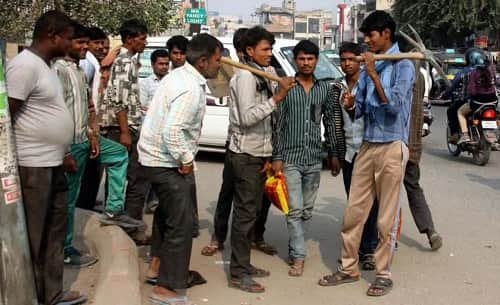
Labour Chowk is one of the most distinctive, socially significant, and economically vital intersections in Surat, Gujarat, India. Unlike most chowks that derive their names from geography, religion, or politics, Labour Chowk earns its identity from the people who gather here every single day — the daily wage workers, skilled tradesmen, construction labourers, and migrant workers who congregate at this junction each morning seeking employment. This open-air labour market is a living institution, a daily exchange of human skill and economic need that has operated for decades and remains an essential component of Surat’s legendary work culture and industrial economy.
In 2026, Labour Chowk continues to pulse with its unique energy as one of Surat’s most active and socially important urban spaces. Surat — one of India’s fastest-growing cities, the world’s diamond cutting and polishing capital, and a major textile and manufacturing hub — depends significantly on the enormous migrant and daily wage workforce that assembles at places like Labour Chowk each morning. From construction workers and plumbers to electricians and painters, the chowk connects the city’s vast informal labour supply with the demand of a booming urban economy, making it an indispensable institution in Surat’s daily life.
Labour Chowk Surat Quick Details
| Category | Details |
| Location | Labour Chowk, Surat, Gujarat – 395003 |
| Also Known As | Majoor Chowk; Labour Square Surat |
| Nearest City | Vadodara (~150 km), Mumbai (~265 km) |
| Highway | Connected via NH-48 (Mumbai–Ahmedabad Highway) and Ring Road |
| Key Roads | Ring Road, Udhna Road, Katargam Road, Limbayat Road, Varachha Road |
| Nearest Railway Stn | Surat Railway Station (~4 km) |
| Nearest Metro | Surat Metro (under construction; stations planned along key corridors) |
| Nearest Airport | Surat Airport (~12 km) |
| Bus Connectivity | GSRTC buses, BRTS Surat, city buses, autos, e-rickshaws |
| Iconic Landmark | Surat Castle, Dutch Cemetery, Sardar Patel Museum |
| Importance | Labour market, transit, residential & commercial hub |
| Nearby Areas | Udhna, Katargam, Limbayat, Varachha, Majura Gate |
| Pin Code | 395003 |
| Admin Body | Surat Municipal Corporation (SMC) |
| Redevelopment Status | Smart City Mission and Surat Metro urban upgrades (ongoing) |
1. Location & Identity of Labour Chowk
Labour Chowk is located in the Udhna–Limbayat corridor of Surat, one of the most industrially active and densely populated zones of the city. The chowk sits at a key road junction connecting Ring Road to Udhna Road, Katargam Road, and Limbayat Road — corridors that run through the heart of Surat’s enormous textile and manufacturing belt. Its position within reach of Surat’s largest industrial zones makes it the natural assembly point for the daily wage workforce that keeps the city’s economy moving.
Surat is a city of extraordinary economic energy — it processes over 90 percent of the world’s rough diamonds, produces a massive share of India’s synthetic textile output, and sustains one of the highest per capita income levels among Indian cities. This industrial machine runs on the labour of millions of workers, many of them migrants from states like Uttar Pradesh, Bihar, Odisha, Rajasthan, and Madhya Pradesh, who make Surat their working home. Labour Chowk is where this workforce makes itself available each day, embodying the raw economic vitality that defines Surat’s character.
The identity of Labour Chowk is shaped by:
- Its unique function as Surat’s most active open-air daily labour market
- Its role in connecting Surat’s vast migrant workforce with the city’s booming construction and industrial economy
- Its location within the industrial heart of one of India’s fastest-growing cities
It is often described as:
- Surat’s open-air employment exchange — where skill meets opportunity every morning
- A living symbol of the migrant worker’s contribution to India’s economic growth story
The area is surrounding by:
- Textile mills, diamond polishing units, and small-scale manufacturing establishments
- Dense migrant worker residential areas, chawls, and affordable housing
- Daily markets, dhabas, and essential services catering to the working population
Administered by: Surat Municipal Corporation (SMC) — widely regarded as one of India’s best-run municipal bodies — responsible for civic maintenance, road management, and urban development across the city.
2. Connectivity & Transport Infrastructure
Labour Chowk enjoys strong road and public transport connectivity within Surat and to the wider Gujarat and Maharashtra region, making it accessible from all parts of the city and from the migrant source states that supply Surat’s enormous workforce.
1. Road Connectivity
NH-48 (Mumbai–Ahmedabad Highway):
One of India’s busiest and most economically important national highways, NH-48 runs through Surat connecting the city to Mumbai and Ahmedabad. The highway is the primary intercity road artery for Surat’s enormous industrial goods traffic and serves as the main entry corridor for migrants and commercial traffic arriving from Maharashtra and other states.
Ring Road:
Surat’s Ring Road is one of the city’s most important internal arterials, connecting all of Surat’s major industrial and residential zones in a circular corridor. Labour Chowk’s position near the Ring Road gives it excellent intra-city accessibility, allowing workers to reach construction sites and industrial units across the city with relative ease.
Udhna Road and Katargam Road:
These key corridors connect Labour Chowk directly to Surat’s major industrial zones — Udhna is home to large textile and engineering manufacturing units while Katargam is the heart of Surat’s famous diamond polishing and synthetic textile industries. These roads carry enormous daily volumes of worker and commercial traffic.
2. Rail & Airport Connectivity
Surat Railway Station:
Located approximately 4 km from Labour Chowk, Surat Railway Station is one of the busiest stations in Western Railway, handling massive volumes of daily passenger traffic including the enormous flow of migrant workers travelling between Surat and their home states. The station provides direct connectivity to Mumbai, Ahmedabad, Delhi, Patna, Lucknow, Varanasi, and other major cities, serving as the primary gateway for Surat’s migrant population.
Surat Airport:
Situated approximately 12 km from the chowk, Surat Airport offers domestic flights to Delhi, Mumbai, Bengaluru, Hyderabad, and Kolkata. With Surat’s growing business community and diamond trade requiring frequent air travel, the airport plays an increasingly important role in the city’s connectivity.
3. Public Transport & Movement
- BRTS Surat (Bus Rapid Transit System) — one of India’s most successful BRTS networks — provides fast, affordable city-wide bus connectivity
- GSRTC buses connect Surat to Ahmedabad, Vadodara, Mumbai, and all major Gujarat cities
- Auto-rickshaws and shared tempos serve short-distance intra-city travel
- E-rickshaws provide last-mile connectivity within the industrial and residential zones around the chowk
Surat Metro, currently under construction, will further transform the city’s public transport landscape, with planned corridors running through key zones including the industrial belt that surrounds Labour Chowk.
3. Historical Background & Cultural Significance
Labour Chowk and the surrounding Surat industrial belt carry a history deeply connected to Surat’s centuries-old identity as India’s greatest trading and commercial port city and its modern transformation into an industrial powerhouse.
Surat’s Trading & Industrial Legacy
Surat was once India’s most important port city — the gateway through which Mughal trade with the world flowed, the landing point for early British and Dutch traders, and the commercial capital of the subcontinent before Bombay’s rise. This deep trading tradition evolved into Surat’s modern industrial identity: the city became the world’s premier diamond cutting and polishing hub from the mid-20th century, and its synthetic textile industry grew into one of the largest in Asia. Labour Chowk emerged as a critical node in this industrial ecosystem, providing a daily marketplace where the skilled and unskilled workforce needed to run this enormous economy could be hired, connecting the needs of contractors and builders with the skills of workers from across India.
Iconic Landmarks Nearby
- Surat Castle (Surat Fort) — a 16th-century fort overlooking the Tapti River, one of Surat’s most important historical monuments
- Dutch Cemetery and English Cemetery — rare colonial-era heritage sites reflecting Surat’s status as India’s first European trading post
- Sardar Patel Museum — Surat’s principal museum preserving the city’s rich historical and cultural heritage
- Dumas Beach — Surat’s popular coastal destination, accessible from the city
- Textile Market Surat — one of Asia’s largest wholesale fabric markets, a commercial landmark
These landmarks collectively reflect Surat’s extraordinary depth as a city that has been at the center of Indian trade, commerce, and industry for five centuries.
Cultural & Community Character
Labour Chowk represents:
- The extraordinary diversity of Surat’s migrant worker community — a cross-section of India’s working population from over a dozen states
- Festivals including Navratri, Uttarayan (Makar Sankranti), Diwali, Holi, Chhath Puja — each celebrated by different migrant communities with great enthusiasm
- The indomitable entrepreneurial and working spirit that defines Surat’s unique culture and economic character
4. Commercial & Market Activity
Labour Chowk and its surrounding areas support a dense and active local economy driven by Surat’s industrial workforce, daily migrant worker needs, and the proximity to the city’s major manufacturing and textile trade zones.
Key Commercial Zones
- Surat Textile Market — one of Asia’s largest synthetic fabric wholesale markets, a global trade destination
- Diamond Bourse and polishing units in Katargam — processing over 90 percent of the world’s rough diamonds
- Udhna industrial zone — large-scale textile, chemical, and engineering manufacturing
- Labour Chowk local market — daily essentials, tools, hardware, and affordable goods for the working population
What You’ll Find
- Construction tools, hardware, and daily work equipment sought by the labour workforce
- Affordable daily groceries, provisions, and essential goods
- Garments, footwear, and work clothes at accessible prices
- Dhabas, food stalls, and affordable eateries serving the working population
The area attracts:
- Daily wage workers and skilled tradesmen seeking employment each morning
- Contractors and builders sourcing labour for construction and industrial projects
- Migrant workers conducting daily commerce and sending remittances home
Street Food & Dining
The area around Labour Chowk offers hearty and affordable food catering to a diverse working population:
- Locho — Surat’s most beloved street snack, a soft savoury gram flour dish served with chutney
- Sev usal, undhiyu, and Surti dishes reflecting Gujarat’s rich culinary traditions
- Dhabas serving North Indian meals — dal, roti, sabzi — catering to the large UP and Bihar migrant community
The food culture around Labour Chowk is a microcosm of India itself — a diverse, affordable, and hearty spread that feeds the workforce powering one of India’s greatest economic engines.
5. Real Estate & Commercial Importance (2026)
The Labour Chowk area and Surat’s broader industrial belt represent steady and growing real estate activity, driven by the city’s economic expansion and the enormous housing demand generated by its migrant workforce.
Current Trends
- Strong demand for affordable residential units, chawls, and rental housing driven by Surat’s migrant worker population
- Growing interest in mid-segment residential developments from Surat’s upwardly mobile working class
- Rising commercial property demand along Ring Road and Udhna Road driven by industrial and retail businesses
Investment Perspective
- Surat’s consistently high economic growth rate ensures strong long-term real estate demand
- The Surat Metro project is expected to significantly enhance property values along its planned corridors
- Surat’s designation as one of India’s top Smart Cities adds infrastructure quality that supports real estate appreciation
It is ideal for:
- Investors seeking affordable residential properties in one of India’s fastest-growing cities
- Commercial investors targeting Surat’s expanding industrial and trade economy
- Hospitality and essential service businesses catering to Surat’s enormous migrant workforce
6. Social Infrastructure & Daily Life
Labour Chowk and the surrounding industrial zones are supported by civic and social infrastructure serving Surat’s large working population, though the needs of the migrant community also present ongoing urban challenges that the city continues to address.
1. Education
- Several government and municipal schools in the Udhna, Limbayat, and Katargam areas
- Sardar Vallabhbhai National Institute of Technology (SVNIT) — one of India’s premier technical institutes, located in Surat
- Coaching institutes and skill development centers serving Surat’s workforce and student population
2. Healthcare
- New Civil Hospital Surat — one of Gujarat’s largest government hospitals serving the city’s population
- Multiple private hospitals, clinics, and dispensaries in the industrial zones
- Government health camps and mobile health units regularly serving the migrant worker community
3. Shopping & Lifestyle
- Daily essential markets and affordable retail within walking distance for the working population
- Surat’s famous textile markets providing access to fabric and garments at wholesale prices
- Dumas Beach and Hajira offering affordable recreational options for city residents
7. Modern Redevelopment & Urban Changes
Surat has consistently been recognized as one of India’s best-governed and most progressive cities, and its Smart City Mission investments reflect the ambition of a municipality that takes urban development seriously.
Key Improvements
- BRTS Surat expansion providing fast, reliable bus connectivity through the industrial corridors
- Surat Metro project under construction, with planned lines connecting key city zones
- Road widening and junction upgrades on Ring Road and key industrial arterials
- Smart City Mission projects improving drainage, lighting, and civic amenities in the industrial zones
Impact
- BRTS has significantly improved daily commute experience for Surat’s working population
- Surat Metro will transform connectivity across the city when fully operational
- Improved civic infrastructure enhancing quality of life in the industrial and residential zones
This redevelopment has helped balance:
Surat’s industrial and migrant-worker character + world-class Smart City civic infrastructure
Conclusion
Labour Chowk in Surat is far more than a road intersection — it is a living institution, a daily testament to the dignity of work, and a powerful symbol of the migrant worker’s indispensable contribution to India’s economic growth story.
In 2026, the chowk stands as one of the most unique and socially significant urban spaces in India. In a city that processes the world’s diamonds, weaves Asia’s textiles, and sustains one of the highest growth rates in the country, Labour Chowk reminds us that behind every gleaming skyscraper and humming factory floor is a workforce of extraordinary resilience and skill. With Surat’s BRTS network, upcoming Metro, strong rail and highway connectivity, and the continued growth of India’s most dynamic industrial city, Labour Chowk remains one of Surat’s most essential and irreplaceable urban landmarks.
Whether you are a contractor seeking skilled workers, a researcher studying India’s urban labour economy, a visitor witnessing Surat’s extraordinary diversity, or simply passing through one of India’s most energetic cities, Labour Chowk offers an experience that is raw, real, and deeply reflective of the working spirit that makes India grow.