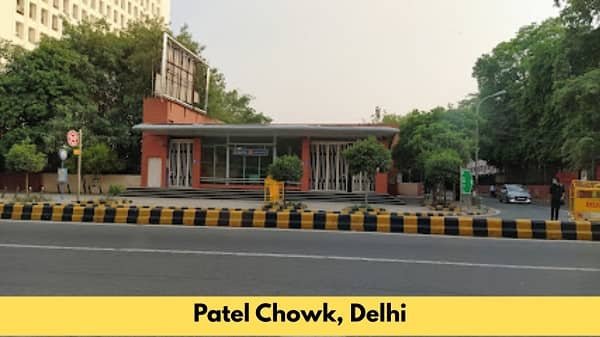
At the heart of India’s capital — where the corridors of constitutional power meet the bustling arteries of Central Delhi — lies Patel Chowk. Located at the intersection of Ashoka Road and Sansad Marg (Parliament Street) in New Delhi – PIN 110001, Patel Chowk is one of the most strategically significant junctions in the country. It takes its name from Sardar Vallabhbhai Patel — the ‘Iron Man of India’, India’s first Deputy Prime Minister and Home Minister, who played a defining role in unifying the Indian princely states after independence. The chowk itself stands as a tribute to his enduring legacy, embedded in the very geography of the nation’s administrative capital.
Patel Chowk is the gateway to India’s constitutional and administrative core. Within a 500-metre radius of the junction sit Parliament House (Sansad Bhawan), the Election Commission of India, the headquarters of BSNL (Sanchar Bhawan), Akashvani Bhawan (All India Radio), and a dozen major ministries and government offices. Jantar Mantar — the 17th-century astronomical observatory — is just 460 metres away. India Gate and Rajpath (Kartavya Path) are within 2 km. The Patel Chowk Metro Station on the Delhi Metro Yellow Line, which opened on July 3, 2005 as part of Phase 1, provides a seamlessly connected underground gateway into this extraordinary district — and hosts the Delhi Metro Rail Museum at its concourse level, making it a destination in its own right. In 2026, Patel Chowk remains one of the most important — and most frequently visited — junctions in India’s capital.
Patel Chowk Quick Overview
| Key Detail | Information (2026) |
| 📍 Address | Patel Chowk, Ashoka Road × Sansad Marg, New Delhi – 110001 |
| 🗺️ Locality | Sansad Marg Area, Central New Delhi (NDMC jurisdiction) |
| 🏛️ Named After | Sardar Vallabhbhai Patel — ‘Iron Man of India’, First Deputy PM & Home Minister |
| 🏙️ Governing Body | New Delhi Municipal Council (NDMC) |
| 🗳️ Assembly Constituency | New Delhi — MLA: Sandeep Dikshit (as of Delhi elections Feb 2025) |
| 🚇 Metro Station | Patel Chowk — Yellow Line (Line 2) | Underground | Code: PTCK |
| 📅 Metro Opened | July 3, 2005 (Delhi Metro Phase 1) |
| ⏰ Metro Timings | First train: ~5:47 AM (towards Samaypur Badli, Platform 2) | Last train: ~11:30–11:52 PM |
| 🚇 Metro Gates | Gate 1 → Ashoka Road / Parliament / Central Secretariat | Gate 2 → Connaught Place |
| 🚇 Adjacent Stations | Rajiv Chowk (1 stop north) | Central Secretariat (1 stop south) |
| 🚇 Metro Museum | Delhi Metro Rail Museum — located at the concourse level (opened 2010) |
| 🚌 Key Bus Routes | 100A, 181A, 390, 408, 433, 47A, 540, 970 | First bus: ~3:00 AM (0AIRPORT 04NS) |
| 🚆 Nearest Railway | New Delhi Railway Station (~1.5 km, 1 metro stop) | Shivaji Bridge Rail Station (~1 km) |
| ✈️ IGI Airport | ~20–22 km (~35–50 min by road | 60–75 min via metro to Airport Express at New Delhi Stn) |
| 🏛️ Iconic Nearby Landmarks | Parliament House (0.5 km), Jantar Mantar (0.46 km), India Gate (2 km), Rajpath / Kartavya Path (1.5 km) |
| 🕌 Key Religious Sites | Gurudwara Bangla Sahib (1.1 km), Hanuman Mandir Connaught Place (0.8 km) |
| 🏥 Key Hospitals | Dr. RML Hospital (1.1 km), Lady Hardinge Medical College & Hospital (0.8 km), G.B. Pant Hospital (~2 km) |
| 🏢 Key Govt. Offices | Sanchar Bhawan (BSNL HQ, 0.15 km), Dak Bhawan, Yojana Bhawan, Akashvani Delhi, Election Commission of India, RBI Delhi, PTI HQ |
| 🚲 Special Features | Cycle hire available at station | Parking (southernmost Yellow Line station in Delhi with parking) | Canara Bank ATM |
| 📬 PIN Code | 110001 (New Delhi) |
Location & Historical Significance
Patel Chowk sits within the New Delhi Municipal Council (NDMC) jurisdiction — the elite civic body governing the planned British-era districts of Lutyens’ Delhi. Unlike the older, denser lanes of Old Delhi or the sprawling residential colonies of South Delhi, the NDMC zone is characterised by wide ceremonial avenues, heritage bungalows, institutional campuses, and strict zoning regulations that preserve the capital’s planned character. Patel Chowk is one of only a handful of named junctions in this zone, underscoring its importance as a navigational and administrative landmark.
The chowk lies at the crossroads of two of New Delhi’s most consequential roads. Sansad Marg (Parliament Street) runs north–south, connecting Connaught Place to the heart of the government district. Ashoka Road runs east–west from Connaught Place toward Mandi House. Together, these roads channel the daily movement of ministers, civil servants, diplomats, journalists, and thousands of support staff who form the workforce of India’s central government apparatus — all of whom pass through or near Patel Chowk.
The New Delhi Assembly Constituency within which Patel Chowk falls is historically one of India’s most watched legislative seats — a bellwether of Delhi’s political mood. In the February 2025 Delhi Legislative Assembly elections, the constituency saw a closely contested result. Patel Chowk’s central location within this constituency reflects its status as a neighbourhood that is simultaneously political, historical, commercial, and deeply connected to the daily life of the national capital.
Patel Chowk Metro Connectivity
1. Station Overview
Patel Chowk Metro Station is an underground station on the Yellow Line (Line 2) of the Delhi Metro, connecting Samaypur Badli in North Delhi to Millennium City Centre (HUDA City Centre) in Gurgaon — covering 48.97 km and 37 stations. It is one of the original Phase 1 stations, having opened on July 3, 2005, the same day as several other central Delhi stations including Chandni Chowk, Civil Lines, and Rajiv Chowk.
The station has 2 platforms and is equipped with escalators, lifts, tactile pathways for visually impaired passengers, air-conditioning, electronic display boards, automated fare collection (AFC) gates, a Canara Bank ATM, and clean public toilets. Cycle hire is available at the station — an uncommon facility among central Delhi metro stations — providing an eco-friendly last-mile option for nearby destinations. The station also holds the distinction of being the southernmost station on the Yellow Line within Delhi city limits to offer parking facilities.
2. The Delhi Metro Rail Museum — Patel Chowk
One of Patel Chowk station’s most distinctive features is the Delhi Metro Rail Museum — a permanent exhibition located at the concourse level of the station, opened in 2010. The museum documents the history and evolution of the Delhi Metro — one of the largest and most technologically advanced urban metro systems in Asia — through photographs, scale models, equipment displays, and multimedia exhibits. It is accessible to all metro passengers at no additional cost and draws a steady stream of students, tourists, and transit enthusiasts. The museum makes Patel Chowk station unique among all DMRC stations: it is the only station that is also a museum.
3. Station Gates & Access
- Gate 1 — Ashoka Road: The primary exit toward the government district. Provides direct access to the Patel Chowk junction itself, Parliament House (500 m), the Election Commission of India, Sanchar Bhawan (BSNL HQ, 150 m), Akashvani Bhawan (250 m), and the cluster of central government ministries along Ashoka Road.
- Gate 2 — Connaught Place: The exit toward Connaught Place’s outer circle (~600 m walk). This gate serves office commuters, shoppers, and tourists headed to CP’s retail and dining zone, Janpath market, and the Rajiv Chowk interchange station.
4. Metro Timings & Frequency
First train from Patel Chowk: 5:47 AM (towards Samaypur Badli, Platform 2). Last train: approximately 11:30–11:52 PM depending on direction. Peak-hour frequency: every 3–5 minutes; off-peak: every 7–10 minutes. The Yellow Line provides direct connections to Rajiv Chowk (Blue Line interchange, 1 stop), New Delhi Railway Station (2 stops), Chandni Chowk (3 stops), Kashmere Gate (Red + Violet Line interchange, 4 stops), and southward to Central Secretariat (Violet Line interchange, 1 stop) and Millennium City Centre, Gurgaon (15 stops).
| Destination Station | Stops Away | Approx. Travel Time |
| Rajiv Chowk (Connaught Place) | 1 stop north | ~3 minutes |
| Central Secretariat | 1 stop south | ~3 minutes |
| New Delhi Railway Station | 2 stops north | ~6 minutes |
| Chandni Chowk | 3 stops north | ~9 minutes |
| Kashmere Gate (Red + Violet interchange) | 4 stops north | ~12 minutes |
| Vishwavidyalaya (Delhi University) | 7 stops north | ~21 minutes |
| Qutab Minar | 7 stops south | ~21 minutes |
| Millennium City Centre (Gurgaon) | 15 stops south | ~47 minutes |
Road & Bus Connectivity
1. Road Connectivity
- Sansad Marg (Parliament Street): The principal north–south arterial of Central Delhi, connecting Connaught Place to Vijay Chowk (Rajpath intersection). This road carries the daily movement of central government commuters and diplomatic traffic, and is ceremonially significant as the approach to Parliament House from the north.
- Ashoka Road: A key east–west arterial connecting the Patel Chowk junction to Connaught Place in the west and Mandi House in the east. Home to the BSNL headquarters (Sanchar Bhawan), several diplomatic missions, and government offices.
- Janpath: Running parallel to and just east of Sansad Marg, Janpath is a major commercial and institutional road connecting Connaught Place southward to Rajpath. The iconic Janpath Market — a popular destination for handicrafts, textiles, and tourist goods — is approximately 700 m from Patel Chowk.
- Kartavya Path (Rajpath): India’s ceremonial boulevard — site of the Republic Day parade and connecting India Gate to Rashtrapati Bhawan — is approximately 1.5 km south-east of Patel Chowk, accessible on foot or by a short auto/cycle ride.
2. Bus Connectivity
Patel Chowk is served by several DTC and cluster bus routes including 100A, 181A, 390, 408, 433, 47A, 540, and 970. The Patel Chowk bus stop is approximately 170 m from the metro station exit — a 3-minute walk. The nearby Palika Kendra Terminal (~420 m) and Rajiv Chowk bus terminus (~332 m) provide additional bus access to all major Delhi zones. The first bus (0AIRPORT 04NS) starts at 3:00 AM — providing very early morning airport connectivity. DTC HOHO (Hop-On Hop-Off) tourist buses, which circuit Delhi’s key heritage landmarks, also stop near Patel Chowk.
3. Rail & Air Connectivity
- New Delhi Railway Station: 1 stop north on the Yellow Line (~6 minutes), from where the Delhi Airport Metro Express provides a direct non-stop connection to IGI Airport Terminal 3 in approximately 21 minutes.
- Shivaji Bridge Railway Station: Approximately 1 km from Patel Chowk — a minor suburban rail station on the Delhi Ring Railway, serving as a close walking alternative for some suburban rail services.
- IGI Airport: 20–22 km from Patel Chowk. Fastest route: Metro to New Delhi Station (1 stop) + Airport Express Line (~21 min) = total approximately 35–40 minutes. By road via NH-48: 35–50 minutes depending on traffic.
Nearby Government Offices, Institutions & Landmarks
Patel Chowk’s defining characteristic is its extraordinary density of government offices, constitutional bodies, heritage monuments, and national institutions within walking distance. No other metro station in India offers pedestrian access to this concentration of national governance landmarks.
| Place / Institution | Distance | Category |
| Sanchar Bhawan (BSNL HQ) | ~150 m | Government Office |
| Jantar Mantar (Astronomical Observatory) | ~460 m | Heritage & Tourism |
| Parliament House (Sansad Bhawan) | ~500 m | Constitutional Landmark |
| Gurudwara Bangla Sahib | ~1.1 km | Sacred Shrine |
| Dr. Ram Manohar Lohia (RML) Hospital | ~1.1 km | Major Govt. Hospital |
| Lady Hardinge Medical College & Hospital | ~0.8 km | Premier Medical College |
| Rajpath / Kartavya Path | ~1.5 km | Ceremonial Boulevard |
| India Gate | ~2 km | National War Memorial |
| Connaught Place (Rajiv Chowk metro) | ~0.6 km walk / 1 metro stop | Central Business District |
| National Philatelic Museum | ~0.5 km | Heritage Museum (within walking distance) |
| Rashtrapati Bhawan (President’s Estate) | ~1.8 km | Presidential Residence |
| Vigyan Bhawan | ~1.2 km | Premier Convention Centre |
| Election Commission of India | ~0.4 km | Constitutional Body |
| Akashvani Bhawan (AIR HQ) | ~0.25 km | Government Media |
| YMCA / YWCA New Delhi | ~0.8 km | Hospitality & Community |
| Hanuman Mandir, Connaught Place | ~0.8 km | Religious & Cultural |
| New Delhi Railway Station | ~1.5 km | Rail Connectivity Hub |
| IGI Airport (via Airport Express) | ~20–22 km | Air Connectivity |
Healthcare & Education Near Patel Chowk
1. Healthcare
The Patel Chowk area is exceptionally well served by government hospitals. Dr. Ram Manohar Lohia (RML) Hospital (~1.1 km) — one of Delhi’s premier central government hospitals with 1,500+ beds — handles general, specialist, and emergency care for central government employees, civil servants, and the general public. Lady Hardinge Medical College & Hospital (~0.8 km) is among India’s most historic and respected government medical colleges, with a large public hospital attached. G.B. Pant Hospital (~2 km) and Safdarjung Hospital (~4 km) are additional major government healthcare facilities accessible within a short metro or taxi ride. The RBI Dispensary on Sansad Marg is directly opposite Akashvani Bhawan — approximately 400 m from Patel Chowk — serving government employees in the immediate area.
2. Education
While Patel Chowk is primarily an administrative and commercial district rather than a residential one, several important educational and training institutions are within reach. St. Columba’s School, Gole Market — one of Delhi’s most prestigious CBSE boys’ schools — is approximately 1.5 km away. Lady Hardinge Medical College (~0.8 km) is a leading government medical institution. Numerous IAS coaching institutes and civil services preparation centres cluster along Mukherjee Nagar (~8 km via metro) and around Rajendra Place — easily accessible from Patel Chowk via the Yellow Line — drawing thousands of UPSC aspirants who frequently pass through this station.
Frequently Asked Questions (FAQs)
Q1. Where exactly is Patel Chowk located in Delhi?
Patel Chowk is located at the intersection of Ashoka Road and Sansad Marg (Parliament Street), in the Sansad Marg Area, New Delhi – PIN 110001. It falls under the New Delhi Municipal Council (NDMC) jurisdiction. The chowk is approximately 500 m from Parliament House, 460 m from Jantar Mantar, and 600 m walking distance from Connaught Place’s outer circle.
Q2. Which metro line serves Patel Chowk, and what are the timings in 2026?
Patel Chowk is served by the Delhi Metro Yellow Line (Line 2), station code PTCK. The station opened on July 3, 2005, as part of Phase 1. The first train starts at approximately 5:47 AM (towards Samaypur Badli, Platform 2) and the last train runs at approximately 11:30–11:52 PM. Peak-hour frequency is every 3–5 minutes. Gate 1 exits toward Ashoka Road and government offices; Gate 2 exits toward Connaught Place.
Q3. What is the Delhi Metro Rail Museum at Patel Chowk?
The Delhi Metro Rail Museum is a permanent exhibition located at the concourse level of Patel Chowk Metro Station, opened in 2010. It documents the history and evolution of the Delhi Metro through photographs, scale models, equipment displays, and multimedia exhibits. It is free to access for metro passengers and is the only metro station in India that doubles as a museum. It is particularly popular with students, transit enthusiasts, and tourists.
Q4. Which government offices are near Patel Chowk?
Patel Chowk is surrounded by one of India’s densest concentrations of government offices. Within 500 m are: Sanchar Bhawan (BSNL HQ, 150 m), Akashvani Bhawan (All India Radio, 250 m), Election Commission of India (400 m), Parliament House (500 m), Dak Bhawan (postal HQ), Yojana Bhawan (planning commission), RBI Delhi, and PTI (Press Trust of India) HQ. Rashtrapati Bhawan (President’s Estate) is 1.8 km away.
Q5. How do I get from Patel Chowk to IGI Airport?
The fastest route from Patel Chowk to IGI Airport is: take the Yellow Line metro 1 stop north to New Delhi Railway Station, then change to the Delhi Airport Metro Express (Orange Line) for a direct, non-stop ride to Airport Terminal 3 in approximately 21 minutes. Total journey time: approximately 35–40 minutes. By road via NH-48, the airport is 20–22 km away and takes 35–50 minutes depending on traffic. The first Airport Express train from New Delhi Station starts around 5:00 AM.
Q6. What is special about Patel Chowk compared to other central Delhi metro stations?
Patel Chowk stands out for three key reasons: (1) It is the only Delhi Metro station that houses a museum — the Delhi Metro Rail Museum at the concourse level. (2) It is the southernmost Yellow Line station in Delhi with parking facilities, plus it offers cycle hire — rare for central Delhi. (3) Its location at Ashoka Road × Sansad Marg places it within walking distance of Parliament House, the Election Commission, Jantar Mantar, RML Hospital, and multiple constitutional bodies — making it the station closest to India’s administrative and democratic heart.
Conclusion
Patel Chowk is far more than a traffic junction or a metro station stop — it is a convergence point of India’s constitutional democracy, historical heritage, and modern urban infrastructure. Named for Sardar Vallabhbhai Patel, the Iron Man who forged India’s territorial unity, the chowk sits surrounded by the institutions and monuments that have defined the nation since independence: Parliament House, the Election Commission, Jantar Mantar, Kartavya Path, and India Gate.
In 2026, Patel Chowk remains exactly what it has always been — essential. For the civil servant reporting to a Sansad Marg ministry, the tourist navigating to Connaught Place or India Gate, the student visiting the Delhi Metro Rail Museum, or the daily commuter connecting to Rajiv Chowk or New Delhi Railway Station — Patel Chowk is the metro stop and the landmark that puts the heart of the capital within reach. A single station on the Yellow Line; an irreplaceable address in the story of New Delhi.