

Silver ETFs Vs Silver Mutual Funds: Which Is Better?
Gold has long been the default precious metal investment for Indian households — embedded in cultural tradition, measurable in every jewellery shop, and available through numerous investment channels. Silver has historically received less structured attention from Indian investors despite being an equally legitimate precious metal with distinct industrial demand drivers that gold doesn’t share. The introduction of Silver ETFs and Silver mutual funds in India has changed this, providing regulated, transparent investment vehicles for silver exposure that avoid the storage, purity verification, and liquidity challenges of physical silver ownership.
For investors considering silver as a portfolio component, the choice between Silver ETFs and Silver mutual funds is worth understanding precisely — because while both provide silver price exposure, they differ in access requirements, cost structure, and operational mechanics.
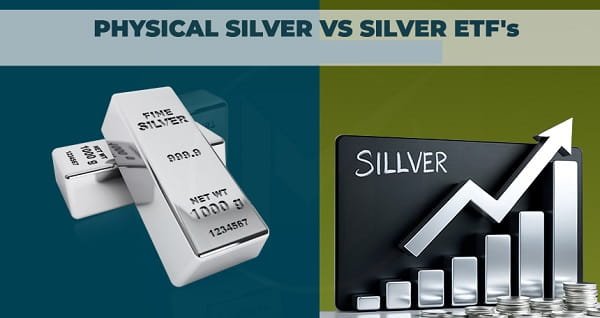
Silver ETFs: How They Work
Silver ETFs are exchange-traded funds that hold physical silver bullion — 99.9% purity — in secure vaults with custodians appointed by the fund house. Each unit of a Silver ETF represents a specific quantity of silver — typically one gram per unit for most Indian Silver ETFs. The ETF’s NAV moves in direct proportion to the prevailing silver price, adjusted for the fund’s expense ratio.
Silver ETFs trade on NSE and BSE during market hours — like any listed stock — at prices that closely track the underlying silver NAV. Buying and selling requires a Demat account and a trading account with a stockbroker. The transaction is executed at the real-time market price during trading hours rather than at an end-of-day NAV.
Silver Mutual Funds: How They Work
Silver mutual funds in India are structured as fund of funds — they invest in Silver ETFs rather than holding physical silver directly. An investor puts money into the Silver mutual fund, which in turn purchases units of the underlying Silver ETF. This adds one layer of structure between the investor and the physical silver.
Silver mutual funds can be purchased and redeemed directly through AMC platforms, MFU, MF Central, and broker platforms — exactly like any other mutual fund. No Demat account is required. Transactions are processed at end-of-day NAV rather than at real-time exchange prices. SIPs can be registered for regular, automatic silver accumulation.
The Key Differences That Determine the Better Choice
Demat Requirement: is the most practically significant difference for many investors. Silver ETFs require a Demat and trading account — an infrastructure that equity investors already have but that pure mutual fund investors who never traded stocks may not maintain. Silver mutual funds require only a KYC-compliant mutual fund account — accessible to every investor regardless of whether they hold a Demat account.
Cost Structure: differs by the fund of funds layer. Silver ETFs carry only their own expense ratio — currently 0.40% to 0.70% per annum for most Indian Silver ETFs. Silver mutual funds carry the Silver ETF’s expense ratio plus an additional fund of funds layer expense — typically 0.05% to 0.20%. The combined expense ratio of a Silver mutual fund is marginally higher than the underlying Silver ETF alone.
SIP Availability: strongly favours Silver mutual funds. Regular automated monthly purchases through SIP are natively supported by Silver mutual funds through the standard mutual fund SIP infrastructure. Silver ETF purchases require manual order placement on the exchange for each purchase — or the use of broker-based SIP features that some platforms offer for ETF accumulation but that are less universally available.
Liquidity and Transaction Flexibility: favours Silver ETFs for investors who want intraday price execution. Selling a Silver ETF at a specific price during a favourable intraday move is possible. Silver mutual fund redemptions execute at end-of-day NAV — the investor cannot control the exact execution price.
Which Is Right for Which Investor
For equity investors who already maintain a Demat and trading account, Silver ETFs are the more direct and marginally lower-cost route — with the intraday liquidity advantage available when needed. For investors who primarily use mutual fund platforms and want to build silver exposure through systematic monthly investments, Silver mutual funds remove the Demat account requirement and enable SIP-based accumulation with the same convenience as any other mutual fund.
Frequently Asked Questions (FAQs)
Q1. How is silver exposure in a portfolio justified alongside equity and debt?
A: Silver provides partial portfolio diversification because its price drivers — industrial demand from solar panels, electronics, and electric vehicles alongside investment demand — differ from equity market drivers. It is not a perfect diversifier but has historically provided value in portfolios during periods of currency weakness and industrial commodity supercycles. Most financial advisors suggest limiting precious metals — gold and silver combined — to 5% to 10% of a portfolio.
Q2. Is the physical silver actually allocated to me as a Silver ETF investor?
A: Silver ETF regulations require the fund to hold physical silver in custodian vaults corresponding to the units outstanding — the silver is allocated to the fund, not individually to each unit holder. You own a proportional economic interest in the fund’s silver holdings. In the event of fund winding up, the silver would be sold and proceeds distributed to unit holders — you do not take physical delivery as an ETF investor.
Q3. Does Silver ETF or Silver mutual fund protect against inflation?
A: Precious metals — including silver — have historically provided partial inflation protection over very long periods, though the relationship is not consistent in short or medium-term windows. Silver’s industrial demand component means its price is also influenced by global manufacturing activity, which can cause it to fall during deflationary recessions — the opposite of what a pure inflation hedge would do. It is better understood as a diversification asset than as a reliable inflation hedge.
Q4. What is the tax treatment of Silver ETFs and Silver mutual funds?
A: Both Silver ETFs and Silver mutual funds are classified as non-equity funds for Indian income tax purposes. All capital gains — regardless of holding period — are taxed at the investor’s applicable income slab rate under the current tax framework applicable from April 2023. The holding period no longer determines the tax rate for these instruments, unlike equity funds where long-term rates are more favourable.
Q5. Can I convert Silver ETF units to physical silver?
A: Standard retail Silver ETF investors cannot convert units to physical silver delivery — the ETF is an electronic investment vehicle, not a commodity delivery mechanism. Institutional investors above specific lot size thresholds may have in-kind creation and redemption mechanisms depending on the fund’s structure. For retail investors, exit from silver exposure is through selling ETF units on the exchange or redeeming mutual fund units at NAV — not through physical metal delivery.
The Bottom Line
All three articles in this set address the expanding toolkit available to Indian mutual fund investors — from global equity access through international funds, to the transaction infrastructure decision between MFU and private platforms, to the precious metals exposure choice between Silver ETFs and Silver mutual funds. In every case, the better choice for any individual investor depends on their existing account infrastructure, their cost sensitivity, and their operational preference for SIP-based accumulation versus exchange-traded flexibility. Understanding these differences before allocating is the discipline that consistently produces better portfolio outcomes than defaulting to whichever option happens to be most prominently marketed.