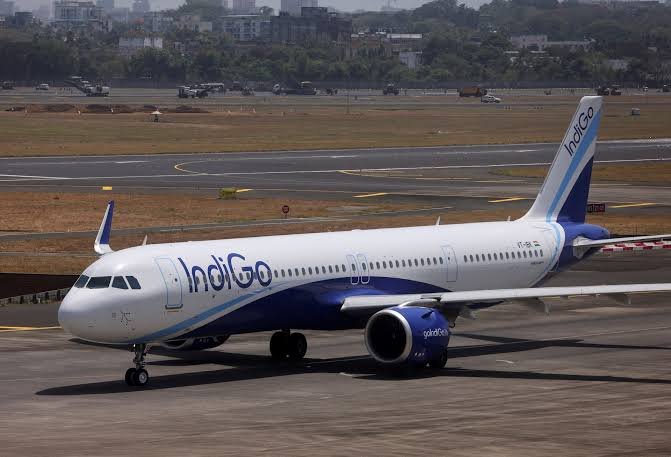
InterGlobe Aviation Limited — the parent company of IndiGo airlines, founded in 2006 by Rahul Bhatia and Rakesh Gangwal and headquartered in Gurugram — is India’s largest airline by market share, consistently commanding approximately 55–60% of domestic passenger traffic and establishing itself as one of the world’s fastest-growing aviation companies. Listed on BSE and NSE, IndiGo operates the world’s largest single-operator fleet of Airbus A320 family aircraft — a fleet standardisation decision that creates maintenance, training, and operational cost advantages of remarkable scale. From its first flight in 2006 to becoming the world’s largest low-cost carrier by orders with Airbus, IndiGo’s two decades of operational execution under the single-minded leadership of its founding team and subsequently CEO Pieter Elbers have created a brand synonymous with punctuality, affordability, and scale in India’s rapidly expanding aviation market.
Strengths
Dominant Market Share and Network Density
IndiGo’s approximately 55–60% domestic market share — sustained consistently across multiple years and competitive entries — creates a self-reinforcing network advantage. More routes generate more passengers, more passengers justify more frequencies, more frequencies create better scheduling options, and better scheduling attracts more passengers. This network density advantage means IndiGo can offer more departure time choices on any given route than competitors — a fundamental scheduling convenience advantage that drives corporate travel preference and time-sensitive passenger loyalty.
Fleet Standardisation Cost Advantages
IndiGo’s commitment to operating exclusively Airbus A320 family aircraft — the world’s most ordered commercial aircraft — creates operational cost advantages that mixed-fleet competitors cannot match. Single aircraft type maintenance reduces spare parts inventory costs dramatically — one parts inventory serves the entire fleet. Pilot training is standardised across the fleet — one pilot type rating qualifies crews for all IndiGo aircraft. Ground handling crew expertise applies to every IndiGo aircraft at every airport. These standardisation savings compound to create structural unit cost advantages that directly support IndiGo’s ability to maintain profitability at fare levels that airlines with complex mixed fleets cannot sustain.
Sale and Leaseback Financial Strategy
IndiGo’s financial model — taking delivery of new aircraft and immediately selling them to lessors while leasing them back — converts aircraft from capital assets to operating expenses, preserving cash and maintaining financial flexibility. This strategy keeps aircraft consistently young and fuel-efficient without permanent balance sheet capital commitments, while the aircraft market’s demand for well-maintained IndiGo-operated Airbus aircraft creates favourable sale-leaseback terms that generate cash gains contributing to profitability.
Brand Association with Punctuality and Reliability
IndiGo’s brand promise — “on time, affordable” — has been consistently delivered across 18 years of operations, creating India’s most trusted airline brand for time-sensitive travellers. In a market where airline reliability has historically been poor, IndiGo’s punctuality record represents genuine differentiated service delivery that commands loyalty from business travellers and frequent fliers.
Weaknesses
Pratt and Whitney Engine Issues
IndiGo’s A320neo fleet has experienced significant disruption from Pratt and Whitney GTF engine manufacturing defects requiring widespread engine replacements — grounding significant aircraft numbers during 2023 and 2024 and creating capacity shortage that simultaneously reduced revenue availability and increased maintenance costs. This engine supply chain vulnerability — entirely outside IndiGo’s operational control — demonstrates the risk concentration created by fleet standardisation on a single engine variant.
Founder Governance Controversy Legacy
The highly publicised dispute between founders Rakesh Gangwal and Rahul Bhatia — including governance concerns raised directly with SEBI — created investor confidence disruption and management attention diversion during a critical operational growth period. While the dispute has largely been resolved following Gangwal’s equity stake reduction, the legacy creates institutional governance scrutiny that the company must continuously address through transparent board oversight and shareholder communication.
Limited Premium and Long-Haul Presence
IndiGo’s pure low-cost carrier model — single-class cabin configuration, no business class, minimal frills — limits revenue per passenger compared to full-service carriers on the same routes. The absence of international long-haul operations also limits IndiGo’s ability to capture the premium international travel market that generates disproportionate airline profitability per available seat kilometre.
Opportunities
India’s Aviation Market Structural Growth
India is projected to become the world’s third-largest aviation market by 2030 — driven by rising incomes, declining real airfares, infrastructure expansion at tier-2 airports, and the shift from train to air travel as airline price accessibility improves. IndiGo’s dominant market share means it captures the largest absolute volume from this structural demand growth — each percentage point of new aviation market growth translates into the largest absolute IndiGo passenger growth of any carrier.
International Expansion
IndiGo’s international operations — growing rapidly across Southeast Asia, Middle East, Europe, and Central Asia — create revenue diversification beyond India’s domestic market and access to higher-yield international passenger segments. Codeshare and interline agreements with long-haul international carriers create connecting passenger revenues that expand IndiGo’s effective network reach without requiring IndiGo to operate the long-haul segments.
Cargo and Ancillary Revenue Development
Building dedicated cargo capabilities and expanding ancillary revenue — seat upgrades, priority boarding, extra baggage, airport lounges, and travel insurance — creates revenue streams that improve yield management and reduce earnings sensitivity to seat fare price competition.
Threats
Aviation Turbine Fuel Price Volatility
Jet fuel represents 30–40% of IndiGo’s total operating costs — global crude oil price spikes directly create earnings compression that cannot be fully passed through to passengers without demand destruction. IndiGo’s hedging strategy manages some of this exposure but cannot eliminate the fundamental crude oil correlation of aviation economics.
Air India and Vistara Competitive Resurgence
The Tata Group’s acquisition and transformation of Air India — combined with the Air India-Vistara merger — is creating India’s most formidable full-service competitor for IndiGo’s premium and international traffic. The Tatas’ financial resources, international brand relationships, and management quality upgrades make the Air India challenge qualitatively different from the fragmented private sector competition IndiGo has historically defeated.
Infrastructure Constraints
India’s airport capacity — particularly in metro cities including Mumbai’s single operational runway — creates slot constraints that limit IndiGo’s ability to add frequencies at the most commercially valuable origin-destination pairs, potentially allowing competitors to capture growth that IndiGo’s market leadership should otherwise dominate.
Conclusion
IndiGo’s SWOT profile describes India’s most operationally disciplined airline — a company whose fleet standardisation, cost management, and network density create a competitive position that has been virtually impregnable for 18 years. India’s aviation growth story is IndiGo’s most powerful tailwind. The engine supply disruption and Air India’s improving competitive threat are the most material near-term challenges. For investors seeking exposure to India’s aviation growth story through its most capable and most established carrier, IndiGo represents the definitive aviation sector investment in Indian public markets.