 11
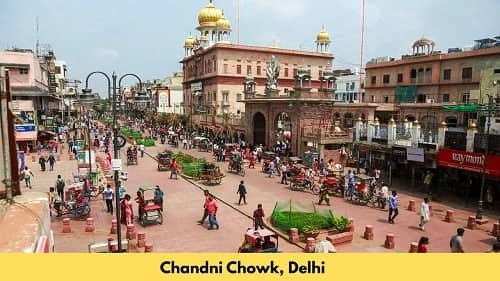
11Few places in india carry as much history, commerce, and sensory intensity as Chandni Chowk — Old Delhi’s legendary bazaar that has pulsed at the heart of the Indian subcontinent’s trade and culture for over 375 years. Founded in 1650 CE by Mughal Emperor Shah Jahan and laid out by his daughter Princess Jahanara Begum, Chandni Chowk was originally a grand moonlit square with a reflecting pool at its centre — the name itself means “Moonlit Square” or “Silver Square” in Urdu. Over centuries it evolved into one of the world’s most labyrinthine and specialised trading districts, where entire lanes dedicate themselves to a single commodity — spices, silver, wedding trimmings, electrical goods, books, or fabric — each with a heritage stretching back generations.
Today, Chandni Chowk attracts 4–6 lakh visitors every day — traders, tourists, foodies, and wholesale buyers — drawn by a combination that no modern mall can replicate: Asia’s largest spice market at Khari Baoli, centuries-old jewellery streets at Dariba Kalan, legendary street food on Gali Paranthe Wali, and the spiritual gravity of Gurudwara Sis Ganj Sahib and the Digambar Jain Lal Mandir. The area sits 1.2 km from the Red Fort — a UNESCO World Heritage Site — and 2 km from Jama Masjid, India’s largest mosque, making it one of Delhi’s densest concentrations of living heritage. With the Delhi Metro yellow Line station at Chandni Chowk and ongoing DMRC multi-modal upgrades in 2025–26, access has never been more convenient for both daily commuters and first-time visitors.
| Key Detail | Information (2026) |
| 📍 Location | Chandni Chowk, Old Delhi, North Delhi, Delhi – 110006 |
| 🏛️ Founded | 1650 CE by Mughal Emperor Shah Jahan; designed by Princess Jahanara Begum |
| 🏙️ Governing Body | Municipal Corporation of Delhi (MCD), North Delhi Zone |
| 📏 Area | Approximately 1.84 sq km (commercial & heritage core) |
| 👥 Daily Footfall | 4–6 lakh visitors daily (shoppers, traders & tourists combined) |
| 🚇 Metro Station | Chandni Chowk Station — Yellow Line (Delhi Metro Line 2) |
| 🚇 Metro Timings | First train: 5:30 AM | Last train: ~11:30–11:50 PM (direction-dependent) |
| 🚇 Metro Gate | Gate 5 — direct access to Chandni Chowk main market street |
| 🚇 Metro Upgrades 2025–26 | DMRC multi-modal integration: e-rickshaw lanes, cycle paths, 2-wheeler stand, toilet upgrades at Gates 1 & 5 |
| 🚆 Rail Connectivity | Old Delhi Railway Station (Delhi Junction) — connected via underground tunnel to the metro station |
| 🚌 Bus Connectivity | DTC & cluster bus routes from Chandni Chowk Bus Terminal; routes to all major Delhi zones |
| ✈️ IGI Airport | ~20–22 km (~35–50 min via NH-48 or NH-44 / 60–75 min by metro + Airport Express) |
| 🏛️ UNESCO Heritage Nearby | Red Fort — 1.2 km (UNESCO World Heritage Site) | Jama Masjid — 2 km |
| 🕌 Key Landmarks | Gurudwara Sis Ganj Sahib, Digambar Jain Temple, St. Stephen’s Church, Fatehpuri Masjid, Shree Gauri Shankar Temple |
| 🛍️ Specialist Markets | Khari Baoli (Asia’s largest spice market) | Dariba Kalan (silver & jewellery) | Kinari Bazaar (wedding accessories) | Bhagirath Palace (electricals) | Nai Sarak (books/stationery) |
| 🍽️ Street Food Icons | Gali Paranthe Wali | Jalebi wala (1884) | Natraj Dahi Bhalla | Pt. Kanhaiyalal Sweets |
| 🕐 Best Visit Timings | Weekdays 11 AM – 4 PM (best) | Avoid Mondays (many shops closed) | Avoid 8–10 AM & 6–8 PM (heavy traffic) |
| 🏠 Property (Residential) | ₹8,000 – ₹14,000 per sq ft (Old Delhi residential pocket, 2026) |
| 🏢 Commercial Rental | ₹200 – ₹700+ per sq ft per month (heritage commercial, varies by lane) |
Chandni Chowk’s story begins in 1639–1648, when Mughal Emperor Shah Jahan commissioned the construction of Shahjahanabad — the walled city that became Old Delhi. Chandni Chowk was the principal artery of this new imperial capital, running westward from the Red Fort’s Lahore Gate to the Fatehpuri Masjid. At its centre was a large octagonal pool that reflected moonlight — the origin of the name. Princess Jahanara Begum, Shah Jahan’s favourite daughter, personally supervised its design and owned several of the caravanserais (rest houses for merchants) along the street.
Over the Mughal period, Chandni Chowk became the commercial heartbeat of the Mughal Empire — a place where merchants from Persia, Central Asia, Arabia, and Europe traded silk, spices, gemstones, and manuscripts. Under British rule, the street was widened, the central pool was replaced by a tree-lined median, and the Chandni Chowk Town Hall (1864) was added to the eastern end. The British also introduced a tram service along the street in 1881 — India’s first urban electric tram — a symbol of the area’s enduring centrality to the city’s life.
Post-independence, Chandni Chowk retained its commercial primacy. A major urban redevelopment project undertaken between 2018 and 2022 pedestrianised the main street — restricting vehicular traffic, widening footpaths, improving lighting, and adding heritage signage and seating. The result is a cleaner, more navigable Chandni Chowk that preserves its chaotic energy while offering visitors a more structured walking experience than ever before.
The Chandni Chowk Metro Station on the Delhi Metro Yellow Line (Line 2) is the most convenient and recommended way to reach the area. The station is an underground facility built during Delhi Metro Phase 1 (completed 2006) and has been upgraded multiple times since, with the most recent upgrades adding automatic fare collection (AFC) gates and escalators in 2010 and 2017. Gate 5 provides direct pedestrian access to the main Chandni Chowk market street and is the recommended exit for first-time visitors.
Metro timings: First train 5:30 AM; Last train approximately 11:30–11:50 PM depending on direction. Peak-hour frequency on the Yellow Line is every 3–5 minutes. As part of DMRC’s multi-modal integration programme initiated in late 2023 and continuing through 2026, ongoing redevelopment around Gates 1 and 5 now includes dedicated e-rickshaw lanes, cycle paths, a public two-wheeler stand, and refurbished toilets — significantly improving last-mile connectivity and reducing pedestrian–vehicle conflict around the station exits.
The Yellow Line connects Chandni Chowk directly to Kashmere Gate (interchange: Red Line, Violet Line), Rajiv Chowk / Connaught Place (interchange: Blue Line), Central Secretariat (interchange: Violet Line), and southward to Millennium City Centre, Gurgaon — making it accessible from virtually every part of Delhi–NCR without a single change.
The Old Delhi Railway Station (Delhi Junction) — one of the busiest and most historic rail terminals in India — is approximately 0.8 km from Chandni Chowk and is connected to the Chandni Chowk Metro Station via a dedicated underground pedestrian tunnel, enabling seamless transfer between rail and metro without stepping onto the road. Trains from Mumbai, Varanasi, Amritsar, Howrah, Lucknow, and all major Indian cities arrive here — making Chandni Chowk an ideal first stop for out-of-town visitors arriving by rail.
The Chandni Chowk Bus Terminal serves DTC and cluster bus routes connecting the area to all major Delhi zones including Connaught Place, Karol Bagh, ISBT Kashmere Gate, Lodi Colony, and South Delhi. Cycle-rickshaws and e-rickshaws operate from the metro station gates and the bus terminal, offering affordable access to the narrow inner lanes of Chandni Chowk’s specialised markets — many of which are not accessible by cars or auto-rickshaws. Parking at Chandni Chowk is extremely limited; arriving by metro, rickshaw, or bus is strongly advised.
Chandni Chowk is not a single market but a network of highly specialised lanes and bazaars, each with its own trade identity, heritage, and ecosystem. Understanding this structure is essential for making the most of a visit.
| Market / Lane | Speciality | Highlight |
| Khari Baoli | Asia’s largest wholesale spice market | 200+ spice varieties; open since Mughal era |
| Dariba Kalan | Silver, gold jewellery & precious stones | Oldest jewellery street in Delhi (~500 yrs) |
| Kinari Bazaar | Wedding accessories, laces, zari trims | Bridal shopping capital of North India |
| Bhagirath Palace | Electrical goods, lighting, medical equipment | Largest wholesale electrical market in India |
| Nai Sarak | Books, stationery & academic supplies | Publisher & printer wholesale hub |
| Gali Paranthe Wali | Iconic street food alley | Stuffed parathas served since 1875 |
| Cloth Market (Kapda Bazaar) | Wholesale & retail fabrics, textiles | Huge variety of silk, cotton, synthetic |
| Ballimaran | Spectacles, frames & Urdu literary heritage | Famous also as Mirza Ghalib’s neighbourhood |
| Meena Bazaar (Urdu Bazaar) | Urdu books, gifts, perfumes | Situated near Jama Masjid gate |
| Chawri Bazaar | Wholesale paper, stationery, hardware | Connected to Chandni Chowk via Pink Line metro |
The main Chandni Chowk street itself runs approximately 1.3 km from the Red Fort gate to Fatehpuri Masjid and is best explored on foot or by cycle-rickshaw. Most wholesale markets open around 10:00 AM and close by 8:00 PM. Monday is a common weekly off-day for many shops. The pedestrianisation project has made the central stretch considerably more walkable, though the inner lanes remain as vibrantly chaotic as ever.
Chandni Chowk sits at the centre of Old Delhi’s dense heritage corridor. The following landmarks are all accessible on foot or by short rickshaw ride from the metro station.
| Landmark | Distance | Significance |
| Red Fort (Lal Qila) | 1.2 km | UNESCO World Heritage Site | Mughal fortification, 1638 |
| Jama Masjid | 2 km | India’s largest mosque | Built by Shah Jahan, 1656 |
| Gurudwara Sis Ganj Sahib | On the street | Sacred Sikh shrine | Marks martyrdom of Guru Tegh Bahadur |
| Fatehpuri Masjid | West end | 17th-century mosque built by Fatehpuri Begum |
| Digambar Jain Lal Mandir | 0.3 km | Oldest Jain temple in Delhi (1656) |
| St. Stephen’s Church | 0.5 km | Delhi’s oldest Anglican church (1866) |
| Shree Gauri Shankar Temple | 0.5 km | 800-year-old Shiva temple |
| Sunehri Masjid | 0.8 km | Historic mosque with gilded domes (1721) |
| Old Delhi Railway Station | 0.8 km | Major rail hub; connected to Chandni Chowk metro via tunnel |
| Raj Ghat | 2.5 km | Mahatma Gandhi’s memorial samadhi |
No visit to Chandni Chowk is complete without exploring its street food heritage — a culinary tradition that in several cases stretches back over 150 years. Gali Paranthe Wali — the narrow alley dedicated to stuffed parathas — has been serving piping-hot parathas with seasonal fillings since 1875. Old Famous Jalebi Wala near the Dariba Kalan crossing has been making fresh jalebis in clarified butter since 1884 and is arguably Delhi’s most photographed sweet stall. Natraj Dahi Bhalle Wala and Pt. Kanhaiyalal Durga Prasad Sweets are among other legendary names that draw dedicated queues of regulars and tourists alike.
Beyond the iconic names, Chandni Chowk’s food culture spans kababs from Karim’s Hotel (near Jama Masjid, 1913), kulfis from century-old dairy shops, chat stalls specialising in golgappas and aloo tikki, and an ever-rotating cast of seasonal specials tied to festivals. Food walk tours — offered by multiple heritage tourism operators and increasingly popular in 2026 — are an excellent way to navigate the culinary landscape with local expert guidance.
Chandni Chowk’s commercial real estate is among the most densely valued and heritage-restricted in Delhi. Commercial shop spaces in the core market lanes command rents of ₹200–₹700+ per sq ft per month depending on location, lane, and frontage — with prime spots on the main street approaching even higher values for branded tenants. The wholesale trade ecosystem anchored here — particularly Khari Baoli (spices), Bhagirath Palace (electricals), Nai Sarak (stationery), and the cloth markets — generates billions in annual turnover and sustains supply chains for retailers across India.
Residential property in the immediate Old Delhi pocket is priced at ₹8,000–₹14,000 per sq ft in 2026 — constrained by heritage conservation rules, limited new development, and the density of the existing built environment. However, for investors in commercial property, Chandni Chowk’s status as an irreplaceable, UNESCO-adjacent trade and heritage address ensures perennially low vacancy and strong holding value. The area is also increasingly attracting heritage tourism and experiential hospitality investments — boutique hotels and heritage havelis are being restored and repurposed within walking distance of the main market.
Q1. Where is Chandni Chowk located in Delhi?
Chandni Chowk is located in Old Delhi, North Delhi, Delhi – PIN 110006. The main commercial street runs approximately 1.3 km from the Red Fort’s Lahore Gate in the east to Fatehpuri Masjid in the west. It is 1.2 km from the Red Fort and 2 km from Jama Masjid — both iconic Mughal heritage monuments.
Q2. How do I reach Chandni Chowk by metro in 2026?
Take the Delhi Metro Yellow Line (Line 2) to Chandni Chowk Metro Station. The station runs from 5:30 AM to approximately 11:30–11:50 PM. Use Gate 5 for direct access to the main market street. As of 2026, DMRC’s multi-modal upgrades around Gates 1 and 5 include dedicated e-rickshaw lanes, cycle paths, a two-wheeler stand, and refurbished toilets for improved last-mile access. The station is also connected via an underground pedestrian tunnel to Old Delhi Railway Station (Delhi Junction).
Q3. What is the best time to visit Chandni Chowk?
The best time to visit Chandni Chowk is on weekdays between 11:00 AM and 4:00 PM, when markets are open and fully active but before the evening crowd peaks. Avoid Mondays, as many shops are closed. Early mornings (before 10 AM) offer quieter streets but limited shop access. Evenings (after 5 PM) are more crowded. Major festivals like Diwali and Dussehra bring exceptional atmosphere but extreme crowds.
Q4. What are the most famous markets in Chandni Chowk?
The most famous specialised markets in Chandni Chowk are: Khari Baoli (Asia’s largest wholesale spice market), Dariba Kalan (silver and fine jewellery, India’s oldest jewellery street), Kinari Bazaar (wedding accessories and bridal trimmings), Bhagirath Palace (India’s largest wholesale electrical and lighting market), Nai Sarak (wholesale books and stationery), and the main Cloth Market (Kapda Bazaar) for wholesale fabrics. Gali Paranthe Wali is the most celebrated food lane.
Q5. Is Chandni Chowk safe for tourists in 2026?
Yes — Chandni Chowk is generally considered safe for tourists. The area receives 4–6 lakh daily visitors including large numbers of international tourists, and has a high visible public and police presence. The pedestrianisation project has made the main street more walkable and manageable. Standard urban precautions apply: keep valuables secure in crowded lanes, pre-agree rickshaw fares before boarding, use Gate 5 of the metro station for the most direct access, and be cautious of overcharging at tourist-facing shops. Hiring a local guide or joining a guided food/heritage walk is highly recommended for first-time visitors.
Q6. What street food should I try at Chandni Chowk?
The must-try street food experiences at Chandni Chowk in 2026 include: stuffed parathas at Gali Paranthe Wali (operating since 1875), hot jalebis at Old Famous Jalebi Wala near Dariba Kalan (since 1884), dahi bhalle at Natraj Dahi Bhalle Wala, and sweets from Pt. Kanhaiyalal Durga Prasad. Near Jama Masjid, the mutton kababs and nihari at Karim’s Hotel (established 1913) are legendary. For dessert, kulfi from the Old Delhi dairy shops and rabri-jalebi from the Purani Dilli stalls round off an authentic culinary walk.
Chandni Chowk in 2026 is neither frozen in time nor surrendering to modernity — it is doing something far more remarkable: evolving on its own terms. The pedestrianisation of the main street, DMRC’s multi-modal upgrades at the metro station, growing heritage tourism infrastructure, and improved last-mile connectivity have made the area more accessible and more navigable than at any time in its recent history, without erasing the raw, layered character that makes it irreplaceable.
Whether you are a wholesale buyer sourcing spices or fabrics for a business, a food traveller chasing Delhi’s most legendary street bites, a history enthusiast navigating the lanes where Mughal emperors once walked, or a property investor tracking one of India’s most heritage-protected commercial real estate addresses — Chandni Chowk remains, after 375 years, the undisputed heart of Old Delhi and one of the most extraordinary urban addresses in the world.