 11
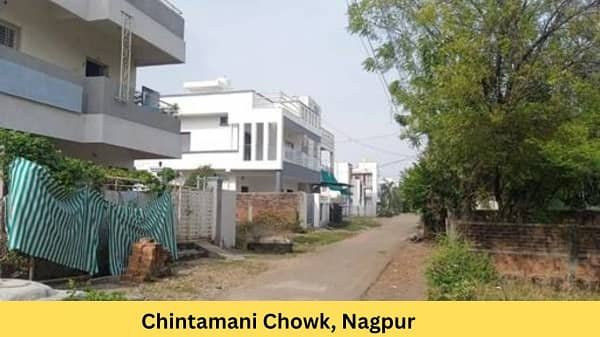
11Chintamani Chowk is one of the most prominent, religiously significant, and commercially active intersections in Nagpur, Maharashtra, india. Located in the heart of one of central India’s most important cities, this iconic chowk derives its name from the revered Chintamani Ganesh Temple — one of Nagpur’s most beloved and historically celebrated places of worship dedicated to Lord Ganesha, the remover of obstacles and the deity of wisdom and prosperity. The chowk serves as a key transit junction, a thriving local market hub, and a deeply cherished civic and religious landmark for the residents of Nagpur and devotees from across the Vidarbha region.
In 2026, Chintamani Chowk continues to thrive as one of Nagpur’s most recognized and culturally charged intersections. As the Orange City — and increasingly the Zero Mile City of India — grows in urban significance, commercial activity, and infrastructure investment, Chintamani Chowk retains its identity as a place where faith, commerce, and daily life intersect. With improving metro connectivity through the Nagpur Metro, strong road access via the city’s expanding arterial network, and a vibrant local market ecosystem, Chintamani Chowk stands as a living expression of Nagpur’s spiritual heritage and commercial energy.
| Category | Details |
| Location | Chintamani Chowk, Nagpur, Maharashtra – 440012 |
| Also Known As | Chintamani Square; Ganesh Chowk Nagpur |
| Nearest City | Wardha (~75 km), Amravati (~155 km) |
| Highway | Connected via NH-44 (Nagpur–Hyderabad Highway) and NH-7 |
| Key Roads | Wardha Road, Abhyankar Road, Ganeshpeth Road, Central Avenue Road |
| Nearest Railway Stn | Nagpur Railway Station (~4 km) |
| Nearest Metro | Nagpur Metro – nearest station on North–South / East–West corridor |
| Nearest Airport | Dr. Babasaheb Ambedkar International Airport, Nagpur (~8 km) |
| Bus Connectivity | MSRTC buses, NMSRTC city buses, autos, e-rickshaws, app-based cabs |
| Iconic Landmark | Chintamani Ganesh Temple, Ganeshpeth Market, Zero Mile Stone |
| Importance | Religious, commercial, transit & cultural hub |
| Nearby Areas | Ganeshpeth, Dhantoli, Sitabuldi, Dharampeth, Sadar |
| Pin Code | 440012 |
| Admin Body | Nagpur Municipal Corporation (NMC) |
| Redevelopment Status | Nagpur Metro expansion and Smart City upgrades (ongoing) |
Chintamani Chowk is located in the Ganeshpeth area of Nagpur, one of the city’s most densely populated and commercially active inner-city zones. The chowk sits at the convergence of Wardha Road, Abhyankar Road, and Ganeshpeth Road, making it a natural daily gathering point for residents, traders, devotees, and commuters from across the city’s central and southern zones. Its position within reach of Nagpur’s wholesale markets, railway station, and major commercial corridors makes it one of the most strategically placed intersections in the city.
Nagpur occupies a unique geographical position at the very center of India — the Zero Mile Stone marking the geographic midpoint of the country is located here — and serves as a critical junction for road, rail, and air travel across the subcontinent. Chintamani Chowk sits within this centrally positioned city, reflecting both its spiritual depth and its commercial vitality.
The identity of Chintamani Chowk is shaped by:
It is often described as:
The area is surrounded by:
Administered by: Nagpur Municipal Corporation (NMC), one of Maharashtra’s most active municipal bodies, responsible for civic maintenance, road management, and Smart City Mission implementation across the city.
Chintamani Chowk enjoys strong road, metro, and public transport connectivity within Nagpur and to the wider Vidarbha region and central India, making it accessible from all parts of the city and beyond.
Wardha Road:
One of Nagpur’s most important arterial roads, Wardha Road connects Chintamani Chowk to the city’s eastern zones, the airport corridor, and onward to Wardha — the town associated with Mahatma Gandhi’s Sevagram Ashram. This road carries heavy daily commuter and commercial traffic and is one of Nagpur’s primary urban arteries.
Abhyankar Road and Ganeshpeth Road:
These key internal roads connect Chintamani Chowk to Nagpur’s wholesale market zone in Ganeshpeth, the Dhantoli residential area, and the broader city center, serving as important daily arteries for traders, residents, and temple visitors.
Central Avenue Road:
One of Nagpur’s most significant commercial roads, Central Avenue connects the chowk zone to Sitabuldi — the city’s primary commercial hub — and to the Nagpur Railway Station, forming part of the backbone of the inner city’s road network.
Road improvement works and junction upgrades are ongoing in the area under Nagpur’s Smart City Mission and NMC infrastructure programs.
Nagpur Metro:
The Nagpur Metro — one of the most successful and well-designed metro systems among India’s newer cities — has transformed urban mobility in Nagpur. The metro’s North–South and East–West corridors provide rapid transit connectivity across the city, with stations accessible from the Chintamani Chowk zone reducing travel times to the railway station, airport, IT parks, and major commercial destinations significantly.
Nagpur Railway Station:
Located approximately 4 km from Chintamani Chowk, Nagpur Junction is one of India’s most important railway junctions, sitting at the intersection of the Mumbai–Howrah and Delhi–Chennai main lines. The station handles enormous passenger volumes and connects Nagpur to virtually every major city in India, reflecting the city’s status as a true geographic and rail network center of the country.
Dr. Babasaheb Ambedkar International Airport:
Situated approximately 8 km from the chowk, Nagpur Airport — named after the great jurist and social reformer Dr. B. R. Ambedkar — offers domestic flights to Delhi, Mumbai, Bengaluru, Hyderabad, Kolkata, and other cities, as well as international connectivity, befitting Nagpur’s status as central India’s most important aviation hub.
The Nagpur Metro has been particularly transformative, offering a clean, fast, and affordable alternative to road transport and significantly easing the traffic pressure on inner-city junctions like Chintamani Chowk.
Chintamani Chowk is deeply embedded in Nagpur’s spiritual, historical, and cultural identity, drawing its significance from one of the city’s most ancient and beloved religious institutions.
The Chintamani Ganesh Temple at the heart of the chowk is one of Nagpur’s most revered and historically significant places of worship. Dedicated to Lord Ganesha in his form as Chintamani — meaning the one who removes all worries and fulfils wishes — the temple has been a center of devotion for the people of Nagpur and the Vidarbha region for generations. Thousands of devotees visit the temple daily, with footfall surging dramatically during Ganesh Chaturthi — one of Maharashtra’s most exuberantly celebrated festivals — and on every Tuesday, considered auspicious for Ganesha worship. The temple’s presence has shaped the entire surrounding neighborhood, attracting flower sellers, prasad shops, devotional goods traders, and a constant stream of pilgrims that gives the chowk its unique sacred-commercial energy.
Nagpur is a city of deep historical and political significance. It was the capital of the Bhonsle kings of Nagpur, later came under British influence, and served as the winter capital of the Central Provinces. The city holds profound importance for India’s social justice movement — Dr. B. R. Ambedkar chose Nagpur as the site of his historic conversion to Buddhism in 1956, along with hundreds of thousands of followers, at the Deekshabhoomi — one of the largest Buddhist conversion ceremonies in history. The Rashtriya Swayamsevak Sangh (RSS), founded in 1925, is also headquartered in Nagpur, making the city politically significant on a national scale.
These landmarks make Chintamani Chowk a gateway to some of the most historically and spiritually significant sites in central India.
Chintamani Chowk represents:
Chintamani Chowk and the surrounding Ganeshpeth area form one of the most commercially active zones in Nagpur’s inner city, supporting wholesale and retail trade across a wide range of goods.
The area attracts:
The chowk and surrounding area are known for their authentic Nagpuri and Vidarbha culinary culture:
The food scene around Chintamani Chowk is richly Nagpuri — bold, flavourful, and deeply rooted in the culinary traditions of the Vidarbha region.
Chintamani Chowk and the surrounding Ganeshpeth–Dhantoli zone represent a well-established and consistently active real estate market in Nagpur’s inner city, driven by the temple’s pilgrimage footfall, wholesale market activity, and the city’s growing economic profile.
It is ideal for:
Chintamani Chowk and the surrounding Nagpur inner-city zone are well-supported by civic, educational, and healthcare infrastructure that sustains the daily life of one of central India’s largest cities.
Nagpur has been at the forefront of urban infrastructure development in Maharashtra, with the Nagpur Metro, Smart City Mission, and MIHAN Special Economic Zone all contributing to the city’s rapid modernization.
This redevelopment has helped balance:
Nagpur’s ancient spiritual heritage and Vidarbha cultural identity + modern metro-linked Smart City infrastructure
Chintamani Chowk in Nagpur is far more than a city road junction — it is a sacred crossroads, a commercial hub, and a daily expression of the faith, energy, and community spirit that define the Orange City of central India.
In 2026, the chowk stands as one of Nagpur’s most beloved and enduring landmarks — a place where the blessings of Lord Ganesha, the bustle of Ganeshpeth’s wholesale markets, the connectivity of the Nagpur Metro, and the pride of India’s Zero Mile City all converge. With the Chintamani Temple drawing thousands of devotees daily, Nagpur Junction providing national rail connectivity, the airport serving central India’s aviation needs, and ongoing Smart City upgrades transforming the urban environment, Chintamani Chowk remains one of Nagpur’s most important, recognized, and cherished intersections.
Whether you are seeking the blessings of Lord Chintamani, conducting trade in Ganeshpeth’s wholesale markets, commuting via the Nagpur Metro, exploring the city’s extraordinary historical and spiritual landmarks, or simply experiencing the warmth and vibrancy of Vidarbha’s greatest city, Chintamani Chowk offers an experience that truly reflects the soul of Nagpur.