
Two-Wheeler Loans: Comparing HDFC, ICICI, and Axis Rates
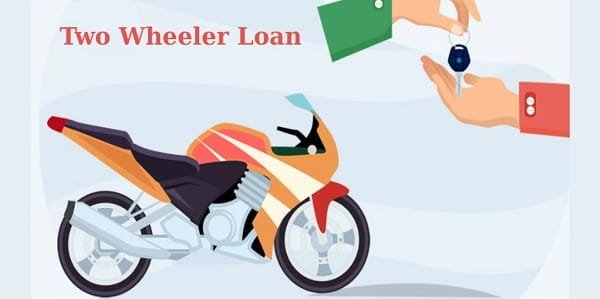
The decision to finance a two-wheeler purchase is one of the most common consumer credit decisions in India — made by millions of buyers every year across the income spectrum. Unlike car loans where the quantum justifies extensive comparison, two-wheeler buyers often accept the first financing offer presented at the dealership without realising that a 1% to 2% interest rate difference across competing lenders translates to ₹3,000 to ₹8,000 in additional interest over a two to three year tenure.
Understanding where HDFC Bank, ICICI Bank, and Axis Bank currently position their two-wheeler loan products — and what factors determine which rate you actually receive — is worth the fifteen minutes of comparison before signing.
HDFC Bank Two-Wheeler Loan
HDFC Bank is one of the most actively distributed two-wheeler loan providers in India — with dealership tie-ups across the country that make their financing offer the first and most visible option at most showrooms.
Interest rates for HDFC Bank two-wheeler loans in 2026 typically range from 10.5% to 16% per annum for salaried borrowers, with the specific rate determined by the applicant’s CIBIL score, income level, loan-to-value ratio, and tenure selected. Customers with existing HDFC salary accounts or pre-approved HDFC loan offers frequently access rates at the lower end of this range.
Processing fees at HDFC Bank for two-wheeler loans are typically 1% to 2.5% of the loan amount plus applicable GST. Loan amounts cover up to 85% to 90% of the on-road price for vehicles from approved manufacturers. Tenures range from 12 to 48 months.
HDFC Bank’s primary competitive advantage is its extensive dealership network presence — the convenience of same-showroom financing often makes their product the path of least resistance for time-pressed buyers.
ICICI Bank Two-Wheeler Loan
ICICI Bank offers competitive two-wheeler financing with interest rates typically ranging from 10% to 15.5% per annum depending on the applicant profile. Existing ICICI Bank account holders — salary account or savings account — frequently access pre-approved two-wheeler loan offers through the iMobile Pay application at rates towards the lower end of the published range.
ICICI Bank’s two-wheeler loan covers up to 90% of the ex-showroom price for select manufacturer models with which the bank has specific financing arrangements. Processing fees are comparable to HDFC at approximately 1% to 2% of the loan amount. The bank’s digital application and approval process for existing customers allows same-day disbursement for pre-approved applicants — a meaningful speed advantage over new-to-bank financing applications.
For borrowers who are existing ICICI Bank customers, the bank’s internal credit assessment based on account behaviour can produce better rate offers than the published range suggests for applicants with strong transaction histories.
Axis Bank Two-Wheeler Loan
Axis Bank’s two-wheeler financing rates for 2026 typically start from 10.5% per annum for the most creditworthy applicants and extend to approximately 16% for applicants with lower scores or shorter credit histories. Axis positions its two-wheeler loans with competitive processing fees — often running festive season zero-processing-fee promotions — and flexible tenure options from 12 to 60 months.
Axis Bank’s 60-month maximum tenure is longer than HDFC and ICICI’s standard 48-month ceiling for two-wheelers — making it the better option for buyers who want to minimise monthly EMI by extending the repayment period, accepting the higher total interest cost in exchange for lower monthly outflow.
Axis Bank’s Burgundy and priority banking customers may access preferential two-wheeler loan rates as part of their relationship banking benefits.
What Determines Your Actual Rate
Published rate ranges are the starting frame — the rate you actually receive depends on four primary variables. Your CIBIL score — scores above 750 access the lowest range at any lender. Your income level and employment category — PSU employees and central government salaried applicants typically receive the best rates. The loan-to-value ratio you choose — lower LTV reduces lender risk and may attract marginal rate improvement. And your existing relationship with the lender — existing account holders consistently receive more favourable pricing than new-to-bank applicants across all three lenders.
The Total Cost Comparison That Matters Most
When comparing lenders, calculate the total outflow — not just the EMI. Add the total interest across the tenure plus processing fees plus GST on processing fees. A loan with a 0.5% lower interest rate but a 1% higher processing fee may cost more overall on a short-tenure two-wheeler loan. Use the EMI calculator on each bank’s website with identical loan amount, rate, and tenure inputs to generate comparable total outflow figures before deciding.
Frequently Asked Questions (FAQs)
Q1. Can I get a zero-down-payment two-wheeler loan from any of these banks?
A: All three banks offer zero-down-payment or 100% on-road financing for specific two-wheeler models from approved manufacturers — particularly for electric scooters under government EV promotion schemes. For conventional petrol two-wheelers, zero-down-payment is available for applicants with strong credit profiles and higher-value vehicle categories. Confirm availability for your specific vehicle model with the lender before expecting full on-road financing.
Q2. Is a dealership’s in-house financing better than bank financing?
A: Dealership financing is usually provided through a manufacturer’s finance arm — Bajaj Finance for Bajaj vehicles, TVS Credit for TVS — or through bank tie-ups. Manufacturer finance arms occasionally offer subsidised rates on specific models as launch promotions. Always compare the effective rate from the dealership’s financing offer against the rates you’d receive from your primary bank’s pre-approved offer — the best rate is wherever the arithmetic works out in your favour.
Q3. Can I prepay my two-wheeler loan without penalty?
A: Prepayment policies vary. For floating rate two-wheeler loans from these banks, RBI’s prohibition on prepayment penalties for individual retail borrowers applies. For fixed rate two-wheeler loans — which are more common in this product category — prepayment charges of 2% to 5% of outstanding principal may apply within a lock-in period. Confirm the foreclosure terms in the loan agreement before signing.
Q4. What documents are required for a two-wheeler loan application?
A: Standard requirements include KYC documents — Aadhaar and PAN, income proof — salary slips for 3 months and bank statements for 6 months for salaried applicants, ITR for 2 years and bank statements for self-employed applicants, vehicle quotation or proforma invoice from the dealer, and passport-size photographs. Pre-approved customers at their primary bank often require minimal additional documentation.
Q5. Does taking a two-wheeler loan improve my credit score?
A: A two-wheeler loan — if repaid consistently and on time — contributes positive payment history to your credit bureau record and improves your score over the loan tenure. For first-time borrowers with no credit history, a two-wheeler loan is one of the most accessible credit-building instruments available — combining a genuine purchase need with bureau history establishment through regular EMI repayment.