
How to Get a Loan Without a CIBIL Score in 2026
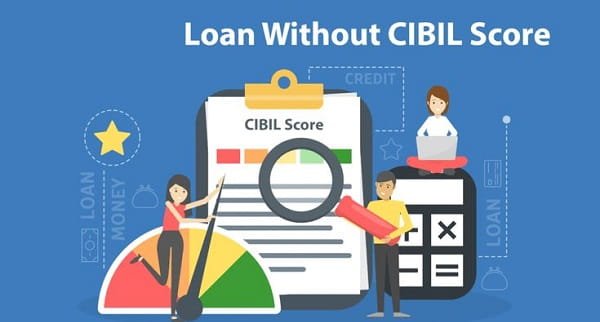
A zero CIBIL score — displayed as NH or NA on your credit report — is one of the most misunderstood positions in Indian consumer finance. Lenders who see it don’t necessarily see a bad borrower. They see an unknown one. The absence of a credit history means no repayment track record exists to assess — and while that creates uncertainty for traditional underwriting models, it doesn’t close every borrowing door.
India’s lending ecosystem in 2026 has diversified well beyond the CIBIL-score-first underwriting model that dominated a decade ago. Alternative data, relationship-based lending, secured products, and government-backed schemes have created genuine pathways for first-time borrowers, new-to-credit individuals, and those who have only ever transacted in cash.
Why You Might Have No CIBIL Score
A no-score status typically reflects one of three situations. You have never taken a loan or credit card — making you genuinely new to formal credit. You took credit products that weren’t reported to bureaus — cooperative bank loans, informal employer advances, or some microfinance products from early years. Or your last credit account was closed several years ago and the bureau no longer has active data to generate a score from.
In none of these situations does the absence of a score indicate financial irresponsibility. It simply indicates that the formal credit system has no data to work with — a problem that is solvable rather than permanent.
Option 1: Secured Loans Against Your Own Assets
The fastest, cheapest, and most accessible credit available to a no-score borrower is secured borrowing — where the lender’s risk is backed by a specific asset rather than by your credit history.
A loan against fixed deposit requires no credit score, no income proof, and no employer verification. Your FD is the security and the only underwriting variable. Loan against gold from regulated NBFCs — Muthoot, Manappuram, Bajaj Finance — disburses in under an hour with only Aadhaar and PAN required. Loan against life insurance policy surrender value, loan against securities — shares or mutual funds — all follow the same collateral-first logic that makes credit history irrelevant.
For any no-score borrower who holds financial assets, secured credit is always the first and best option — lower rate, faster processing, and no score dependency.
Option 2: Existing Banking Relationship
Your salary bank or primary transaction bank has visibility into your actual financial behaviour — income patterns, spending habits, average balance, and payment regularity — that no external lender can access. This internal data is often sufficient for a bank to extend a small personal loan or overdraft facility to a customer with no external credit score.
Check your bank’s netbanking app or mobile application for pre-approved offers. Banks increasingly surface these based on account behaviour data rather than exclusively on bureau scores. The offer may be modest in quantum — ₹25,000 to ₹1 lakh for a first-time borrower — but accepting it and repaying cleanly creates the first bureau entry that begins your credit history.
Option 3: NBFC and Fintech Lenders With Alternative Assessment
Several NBFCs and fintech lenders have built credit assessment models that go beyond the bureau score. Income data from bank statements, GST filing history for business owners, employment verification, educational background, and behavioural data from app usage patterns all feed into alternative underwriting models.
Platforms like KreditBee, Navi, and Faircent have extended credit to thin-file or no-score borrowers based on these alternative signals. Loan amounts and rates reflect the higher uncertainty — smaller amounts and higher initial rates — but the credit-building opportunity is real. One clean repayment cycle creates a bureau entry. Several cycles create a score. A good score opens every subsequent door at far better terms.
Option 4: Credit Builder Loans and Secured Credit Cards
Some NBFCs and small finance banks offer credit builder loans — products specifically designed for the purpose of establishing a credit history. The loan amount is held in a fixed deposit while the borrower pays monthly instalments. Each payment is reported to credit bureaus. At the end of the tenure, the FD is released to the borrower. The loan’s primary purpose is building a bureau record, not providing immediate liquidity.
Secured credit cards — backed by a fixed deposit of ₹5,000 to ₹25,000 — work similarly. The card’s limit equals the deposit amount. Regular usage and full monthly repayment generates bureau entries that build a credit profile within six to twelve months.
Option 5: Government-Backed Schemes
PM MUDRA Yojana, PM SVANidhi, and Stand Up India don’t require existing credit scores for first-generation entrepreneurs and specific priority borrower categories. These schemes explicitly target the unbanked and under-served segments — making credit history a less central underwriting variable than business viability, purpose of borrowing, and borrower category credentials.
Frequently Asked Questions (FAQs)
Q1. How long does it take to build a CIBIL score from zero?
A: Your CIBIL score is generated after you have at least one active credit account that has been reported to the bureau for a minimum of six months. A secured credit card or a small personal loan repaid consistently over six months will generate your first score — typically in the 650 to 700 range if repayments are clean. Twelve months of consistent repayment across one or two credit products generally produces a score above 700.
Q2. Will taking multiple small loans to build credit hurt my score?
A: Multiple loan applications in a short period generate multiple hard enquiries — each of which reduces your score marginally. The counter-productive scenario is applying for many loans simultaneously. The productive approach is taking one or two credit products, repaying them cleanly, and allowing the payment history to build your score before applying for the next product.
Q3. Is a no-score borrower treated the same as a bad-score borrower by lenders?
A: Most sophisticated lenders distinguish between the two. A 550 score reflects known negative history — missed payments, defaults, or high utilisation. An NH score reflects unknown history — no data either way. Many lenders are more willing to extend initial credit to NH borrowers than to known-bad-history borrowers because the clean slate carries no demonstrated repayment problems.
Q4. Can a co-applicant with a good CIBIL score help a no-score borrower get a loan?
A: Yes. Adding a co-applicant with a strong credit profile — a spouse, parent, or sibling — allows the lender to assess the combined application against the co-applicant’s demonstrated creditworthiness. The primary borrower’s no-score status becomes less limiting when the co-applicant provides strong repayment signal. Both applicants share legal responsibility for repayment.
Q5. Does a no-score status affect non-lending financial products like insurance?
A: Some insurance companies use credit scores as a component of their underwriting for specific products — particularly motor insurance and health insurance in certain markets. In India, this practice is not yet prevalent for retail insurance products — premium determination primarily reflects health profile and insured asset value rather than credit history. A no-score status has no current practical impact on standard Indian insurance product access or pricing.