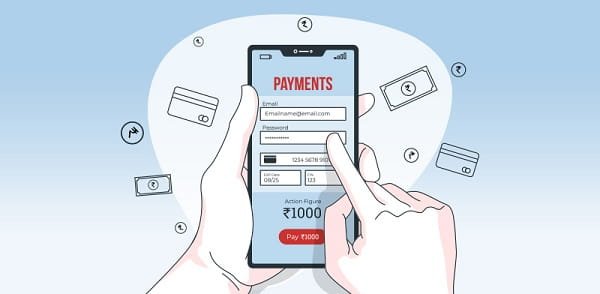

Cyber Insurance for Individuals: Protecting Against Online Fraud
The average Indian smartphone user today conducts more financial transactions digitally in a single week than their parents did in a year. Money moves through UPI in seconds. Insurance premiums are paid by tapping a screen. Investments are managed through apps. This convenience is genuine and transformative — and it has created an attack surface for financial fraud that grows more sophisticated every year.
Cybercriminals in 2026 don’t need to physically steal your wallet. They need your OTP, your account credentials, or enough personal information to impersonate you convincingly to your bank. When they succeed, the financial loss arrives faster than any traditional theft could cause it — and the recovery path is longer and more complicated than most victims expect.
Cyber insurance for individuals is the financial product built for exactly this environment. It doesn’t prevent attacks. It provides compensation and professional support when attacks succeed.

The Risk Landscape Individual Cyber Insurance Addresses
Understanding what cyber insurance covers requires understanding what digital financial fraud actually looks like in practice.
Phishing attacks deliver fake messages impersonating banks, SEBI, or courier companies — directing victims to enter credentials on fraudulent websites that harvest login details for subsequent unauthorised transactions. Vishing calls involve fraudsters posing as bank fraud departments or KYC verification officers who extract OTPs by creating urgency around account security. SIM swap fraud involves attackers convincing telecom operators to transfer a victim’s mobile number to a new SIM — gaining access to every OTP-based authentication for all financial accounts linked to that number.
Each of these succeeds regularly despite public awareness campaigns because the social engineering is sophisticated and the time pressure created is genuine. Individual cyber insurance covers the direct financial loss when these attacks succeed — reimbursing unauthorised transactions, covering the cost of identity restoration, and in comprehensive policies providing access to legal and technical support services during recovery.
Coverage Categories Worth Understanding
Unauthorised financial transaction cover: reimburses money lost through fraudulent transactions on bank accounts, credit cards, UPI, and digital wallets when the loss results from phishing, hacking, or SIM swap rather than voluntary sharing of credentials. The distinction between fraud and negligence is central — insurers cover deception of a reasonably prudent person while excluding losses from voluntarily sharing credentials after understanding what you’re sharing.
Identity theft cover: addresses the downstream consequences when your personal or financial identity is misused — fraudulent loan applications in your name, credit cards obtained using your documents, or your PAN being used for unauthorised financial registrations. The coverage extends to professional assistance — legal fees, notarisation, documentation costs — involved in formally establishing that you didn’t authorise the activity and restoring your financial identity.
Cyber extortion: covers situations where ransomware encrypts your device and demands payment, or where compromised personal data is threatened with exposure unless a payment is made. This was historically a business-focused risk — the proliferation of personal device ransomware has made it meaningfully relevant for individual policies.
Malware and hacking damage: covers direct financial loss and data restoration costs from malware attacks on personal devices that result in financial account access.
What Individual Cyber Policies Don’t Cover
Every policy carries exclusions that define the boundaries of coverage. Losses from the policyholder’s own negligence — knowingly sharing credentials, ignoring active security warnings, or using compromised devices for banking despite awareness — typically fall outside coverage. Business losses conducted through personal devices are generally excluded from individual policies. Cryptocurrency fraud exclusions are standard given the regulatory complexity and irreversibility of blockchain transactions. Prior incidents that occurred before policy inception cannot be claimed regardless of when they’re discovered.
How Coverage Translates to Practical Protection
A practical way to evaluate individual cyber insurance is to consider a specific scenario. An individual receives a call from someone claiming to be their bank’s fraud team. The call is convincing — the caller references recent transactions from the victim’s account, creating credibility. The caller says a suspicious transaction is pending and needs the victim’s OTP to cancel it. The victim provides the OTP. ₹1.8 lakh is transferred from their account within seconds.
The victim’s bank investigation classifies the transaction as customer-initiated — because the OTP was provided voluntarily, the bank’s fraud liability framework may not reimburse the full amount. The cyber insurance policy — which covers vishing-based financial fraud where deception rather than negligence is the mechanism — provides a reimbursement pathway that the banking system alone may not.
Pricing and Accessibility
Individual cyber insurance premiums in India remain modest — annual premiums of ₹2,000 to ₹6,000 typically provide coverage of ₹1 lakh to ₹10 lakh depending on the insurer and plan. Some insurers offer cyber insurance as an add-on to home insurance or comprehensive personal protection plans at even lower incremental premiums. Given the frequency of digital fraud incidents and the speed with which significant amounts can be lost, the premium-to-coverage ratio compares favourably with most other retail insurance products.
Frequently Asked Questions (FAQs)
Q1. How quickly must I report an incident to my cyber insurer for a claim to be valid?
A: Most individual cyber insurance policies require notification within 24 to 72 hours of discovering the fraud or incident. Some policies extend this to seven days for incidents discovered gradually — such as identity theft recognised through a credit bureau alert. Report immediately upon discovery and simultaneously file a cybercrime complaint at your local police station or cybercrime portal — this FIR forms part of the mandatory documentation for most cyber insurance claims.
Q2. Does individual cyber insurance cover social media account hacking?
A: Coverage for social media account compromise depends on whether the hacking resulted in direct financial loss. A hacked social media account used to solicit money transfers from your contacts — resulting in your friends sending money under your identity — may trigger coverage under some policies’ impersonation fraud clauses. A hack that causes reputational damage without direct financial loss may be covered under reputation damage riders available in comprehensive plans but not in basic policies.
Q3. Is cyber insurance useful if I primarily use internet banking rather than apps?
A: Yes. Phishing attacks and credential theft target internet banking users as much as app users — the attack vector changes but the financial fraud risk is equivalent. Internet banking users who receive fraudulent emails directing them to fake bank login pages face identical financial exposure to app users targeted through SMS phishing. The cyber insurance coverage applies regardless of the digital channel through which the fraud was perpetrated.
Q4. Can I get cyber insurance if I have already experienced online fraud recently?
A: Pre-existing incidents — fraud that occurred before the policy’s inception date — are excluded from coverage. Insurance covers future incidents, not prior losses. Most insurers don’t require disclosure of historical fraud incidents as part of the application process for individual cyber policies, though the new policy would only cover events occurring after the effective date.
Q5. Does cyber insurance require any specific security software or practices to maintain coverage validity?
A: Most individual cyber policies don’t mandate specific security software as a coverage condition — the policy doesn’t require you to use a particular antivirus or VPN. However, the negligence exclusion effectively creates a behavioural standard — if you are defrauded after ignoring repeated active warnings from your device or bank, the negligence determination may affect claim outcome. Maintaining reasonable digital hygiene is practically important for both security and claims admissibility.