Eicher Motors Limited — headquartered in New Delhi and part of the broader Eicher Group that traces its origins to 1959 when the German Eicher company established a tractor manufacturing joint venture in India — is today best known globally as the manufacturer of Royal Enfield motorcycles and as a 50:50 joint venture partner with Volvo Group in VE Commercial Vehicles, the Indian commercial vehicle manufacturer. Under the extraordinary leadership of Siddhartha Lal — who took over a financially struggling company in 2000 and made the audacious strategic decision to exit tractors, components, and most other businesses to concentrate entirely on Royal Enfield and the Volvo JV — Eicher Motors has created one of the world’s most remarkable brand turnarounds. Royal Enfield’s transformation from an ageing, almost-failed motorcycle brand into a global lifestyle motorcycle phenomenon generating premium margins and international aspirational appeal represents Indian business strategy’s most celebrated focused turnaround story.
Strengths
Royal Enfield — Unmatched Lifestyle Brand Moat
Royal Enfield’s competitive moat is genuinely unusual in global manufacturing — it has created a lifestyle and community brand around motorcycling that generates consumer loyalty, premium pricing, and word-of-mouth advocacy comparable to Harley-Davidson or heritage automotive brands, but serving a more accessible price point. Royal Enfield owners do not merely purchase a motorcycle — they join a global community of touring enthusiasts, participate in organised riding events, purchase branded merchandise, and develop a brand identity relationship that creates extraordinarily high switching costs. The brand’s vintage British heritage, continuously updated with modern reliability and technology, creates an aesthetic authenticity that Japanese, Korean, and Chinese motorcycle manufacturers consistently fail to replicate despite technical capability and pricing advantages.
350cc–650cc Segment Dominance
Royal Enfield has established near-absolute dominance in India’s premium 250cc–650cc motorcycle segment — the sweet spot between commuter motorcycles and high-end superbikes — capturing approximately 90% of this segment’s sales. This segment is simultaneously India’s fastest-growing motorcycle category as rising incomes enable aspirational upgrades from commuter bikes, and Royal Enfield’s dominance creates a self-reinforcing cycle where brand visibility in this segment attracts new buyers who see Royal Enfields everywhere and aspire to join the community.
VECV and Commercial Vehicle Business
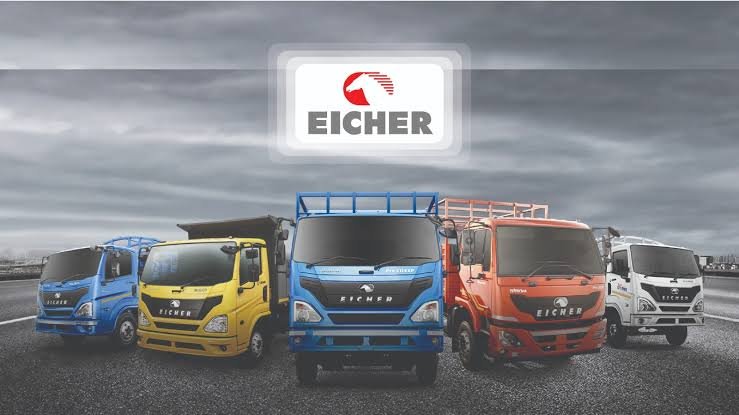
VE Commercial Vehicles — the Volvo-Eicher joint venture producing Eicher-branded trucks and buses alongside Volvo premium trucks — provides Eicher Motors with diversified revenue from India’s commercial vehicle sector. VECV generates substantial revenue from medium and heavy commercial vehicles, buses, and automotive components, providing earnings diversification that buffers Royal Enfield’s two-wheeler sales cyclicality.
International Expansion and Global Brand Building
Royal Enfield’s international expansion — with sales operations in Southeast Asia, Europe, Latin America, North America, and Australia — is progressively growing its global revenue contribution. The brand’s appeal to motorcyclists seeking heritage aesthetics, manageable power, and distinctive character creates a global audience in markets where legacy European manufacturers have abandoned the mid-displacement touring segment. Manufacturing facilities in Thailand for ASEAN markets improve cost competitiveness and reduce import duties in high-growth export markets.
Weaknesses
Revenue Concentration in Royal Enfield
Despite VECV’s contribution, Royal Enfield is the overwhelmingly dominant earnings driver for Eicher Motors — creating concentration risk in a motorcycle market subject to consumer sentiment, financing availability, and competitive dynamics. Any significant Royal Enfield market share loss or demand correction creates disproportionate impact on consolidated financial performance.
Premium Positioning Limiting Addressable Market
Royal Enfield’s positioning in the ₹1.5 lakh to ₹4 lakh price range limits its addressable market to consumers with sufficient disposable income for aspirational motorcycle purchases — excluding the mass commuter market that Hero MotoCorp and Honda serve. While this premium focus creates superior margins, it limits absolute volume growth potential compared to mass-market competitors.
Production Capacity and Waiting Period Management
Popular Royal Enfield models have historically generated waiting periods of several months — simultaneously a sign of brand strength and a potential customer loss risk when waiting customers defect to immediately available alternatives or when waiting period frustration erodes purchase enthusiasm. Capacity expansion must balance demand fulfilment responsiveness with the exclusivity perception that partially drives brand desirability.
Opportunities
Electric Royal Enfield
Royal Enfield’s planned electric motorcycle launch — targeting the lifestyle electric segment that Harley-Davidson’s LiveWire and Triumph’s TE-1 attempt internationally but at a more accessible price point — creates an opportunity to define India’s premium electric motorcycle category before competitors establish positions. Royal Enfield’s brand community and lifestyle positioning translate naturally to electric motorcycles whose instant torque delivery and low running costs enhance the riding experience rather than compromising it.
Adventure and Touring Segment Growth
India’s rapidly growing motorcycle touring culture — weekend escapes to the Himalayas, Spiti Valley, and northeast India routes — is creating demand for adventure-touring motorcycles with off-road capability, long-distance comfort, and luggage capacity. Royal Enfield’s Himalayan and Guerrilla models directly address this growing adventure segment that aligns perfectly with the Royal Enfield community’s riding culture.
International Market Premiumisation
Royal Enfield’s European and American market presence — targeting motorcyclists seeking authentic heritage alternatives to mass-produced Japanese motorcycles — creates long-term brand building opportunities where the premium is significantly higher than domestic Indian pricing, improving overall realisation per unit and demonstrating genuine global brand credentials.
Threats
Bajaj-Triumph and KTM Premium Competition
Bajaj Auto’s Triumph partnership and the KTM alliance create increasingly capable premium competitors in exactly Royal Enfield’s core 350cc–650cc segment. Triumph-branded motorcycles manufactured in India at competitive price points carry international heritage credibility that challenges Royal Enfield’s exclusive ownership of the heritage motorcycle narrative in India.
Japanese and European Premium Motorcycles
Honda’s H’ness CB350, Honda CB 350 RS, and Jawa Motorcycles collectively attempt to replicate Royal Enfield’s lifestyle positioning at competitive pricing — creating ongoing competitive pressure in the brand’s home category even if none has yet materially eroded market share.
Economic Slowdown Impact on Aspirational Purchases
Premium motorcycles are among the first discretionary purchases postponed during income uncertainty or consumer sentiment deterioration — making Royal Enfield’s premium positioning a vulnerability during economic slowdowns when commuter motorcycle segments demonstrate more resilient demand.
Conclusion
Eicher Motors’ SWOT profile describes India’s most compelling focused brand strategy story — a company that sacrificed business breadth for brand depth and created a genuinely global motorcycle icon in the process. Royal Enfield’s community moat, heritage authenticity, and segment dominance create competitive advantages that are genuinely difficult to overcome through product or pricing competition alone. The electric transition and international expansion represent the most exciting value creation opportunities available, while the lifestyle brand’s fundamental durability provides exceptional resilience against conventional competitive threats.