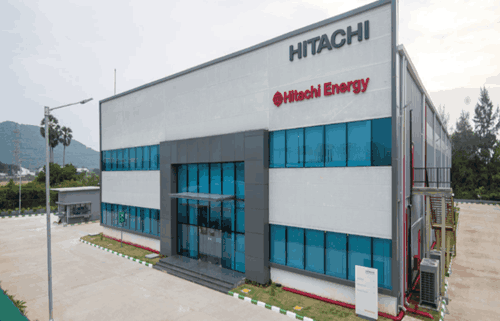
Hitachi Energy India Limited — formerly ABB Power Products and Systems India, renamed following the 2020 global joint venture between Hitachi and ABB’s power grids division that created Hitachi Energy as an independent entity, listed on BSE and NSE and headquartered in Bengaluru — is India’s most specialised high-voltage power equipment and grid technology company, providing transformers, high-voltage direct current systems, reactive power compensation, grid automation, and digital substation solutions to utilities, renewable energy developers, railways, and industrial customers. As a subsidiary of Hitachi Energy Ltd — the global power technology joint venture that combines Hitachi’s digital and IT strengths with ABB’s power grids engineering heritage — Hitachi Energy India operates at the most technologically advanced frontier of India’s electricity grid modernisation, providing the equipment and systems that make large-scale renewable energy integration, HVDC transmission, and smart grid operation technically feasible.
Strengths
HVDC Technology Leadership — Critical for India’s Renewable Grid
Hitachi Energy is one of only three global companies with proven high-voltage direct current (HVDC) system delivery capability at commercial scale — alongside Siemens and General Electric. HVDC technology is essential for transmitting large volumes of renewable energy over long distances from generation-rich Rajasthan and Gujarat to consumption-dense Maharashtra and UP without the transmission losses of conventional AC systems. India’s renewable energy expansion makes HVDC infrastructure deployment inevitable — Hitachi Energy’s technology monopoly in this specific and critical application creates a protected revenue stream that no domestic competitor can threaten and few international competitors can serve.
Transformer Manufacturing Scale and Quality
Hitachi Energy India manufactures power transformers from its Vadodara and Savli facilities — producing the ultra-high-voltage transformers used in India’s 765 kV and 1200 kV transmission network that require precision engineering capabilities unavailable in domestic transformer manufacturers below a handful of global-standard producers. These transformers — essential for every major grid capacity addition — command premium pricing reflecting the technical complexity of their manufacture and the catastrophic consequences of failure in live high-voltage transmission systems.
Grid Digitalisation and Automation
Hitachi Energy’s digital substation solutions — combining conventional switchgear with IEC 61850 digital communication, advanced sensors, and cloud-connected monitoring — provide India’s power utilities with the grid intelligence required for managing complex renewable energy integration, demand response, and cybersecurity protection simultaneously. This digital grid technology transition creates recurring software maintenance, data management, and update revenue streams that supplement the traditional capital equipment sales model.
Parent Hitachi’s Digital and AI Capabilities
The combination of ABB Power Grids’ 100-year power engineering heritage and Hitachi’s contemporary digital transformation, AI, and IoT capabilities creates a differentiated offering in grid technology — physical power equipment enhanced with intelligent monitoring, predictive maintenance, and optimisation software that pure hardware competitors cannot match. This convergence of energy engineering and digital intelligence is the defining competitive differentiator in next-generation grid technology.
Weaknesses
Revenue Concentration in Capital Expenditure Projects
Hitachi Energy India’s revenue is predominantly driven by large capital project orders — transformers, HVDC systems, and substations for utility and infrastructure projects — creating lumpiness in quarterly revenue recognition that depends on order booking pace and project execution timelines. This capital project dependence creates revenue volatility and backlog management complexity that recurring service-based revenue models avoid.
Limited Scale Compared to Domestic Competitors in Standard Products
In standard distribution transformers and medium-voltage switchgear — large-volume commodity categories — Hitachi Energy India competes against large domestic manufacturers including BHEL, Crompton Greaves, and Siemens India with scale advantages in cost and distribution that Hitachi Energy’s premium technology focus does not compensate for at the volume end of the market.
Niche Market Concentration
Hitachi Energy India’s technology specialisation — while creating protected competitive positions in HVDC and ultra-high-voltage equipment — simultaneously limits total addressable market size compared to broad-spectrum industrial technology companies. Market concentration in a technology niche means revenue growth is bounded by the pace of that niche’s expansion regardless of market share performance within it.
Opportunities
India’s Renewable Energy Transmission Infrastructure
India’s renewable energy buildout — targeting 500 GW by 2030 — requires an estimated 50,000+ MVA of new transformer capacity, multiple HVDC links for inter-regional renewable power transfer, and thousands of grid automation systems for managing renewable intermittency. Hitachi Energy India’s HVDC monopoly and transformer quality leadership position it to capture the highest-value components of this investment programme at premium margins unavailable in commodity electrical equipment categories.
Railway Electrification Technology
Indian Railways’ electrification programme — one of the world’s largest rail electrification projects — requires traction transformers, power supply systems, and energy management solutions in which Hitachi Energy’s specific railway power technology expertise creates natural competitive advantages over general electrical equipment manufacturers.
Battery Energy Storage Integration
Grid-scale battery energy storage systems — increasingly necessary for managing renewable energy intermittency in India’s evolving grid — require sophisticated power conversion, protection, and management systems that Hitachi Energy’s power electronics and grid automation expertise positions it to supply. The battery storage market’s rapid growth creates a new revenue category specifically aligned with Hitachi Energy’s core technology strengths.
Threats
BHEL and Chinese Transformer Manufacturers
BHEL’s transformer manufacturing capability and Chinese manufacturers’ pricing — particularly for standard and medium-voltage transformers — create competitive pressure that limits Hitachi Energy’s participation in the large-volume standard transformer market below the ultra-high-voltage premium segment where its competitive advantages are most pronounced.
Project Execution and Delivery Delays
Large capital equipment projects — particularly HVDC systems requiring integrated engineering, manufacturing, installation, and commissioning — face execution risk from site readiness delays, regulatory clearance issues, and supply chain disruptions that create revenue recognition delays and cost overruns affecting project margins.
Technology Competition from Siemens Energy and GE
Siemens Energy and General Electric compete directly with Hitachi Energy in HVDC, high-voltage transformers, and grid automation — maintaining continuous innovation investment that requires Hitachi Energy to invest equivalently in next-generation technology development to sustain the technological leadership that justifies its premium positioning.
Conclusion
Hitachi Energy India’s SWOT profile describes India’s most technologically specialised power infrastructure company — a business whose HVDC capability, ultra-high-voltage transformer quality, and grid digitalisation expertise create a protected competitive niche precisely at the intersection of India’s most critical infrastructure investment imperatives. The renewable energy transmission buildout is the defining demand driver for the next decade — Hitachi Energy India is more precisely aligned with this specific investment theme than any other listed Indian company. Its premium technology positioning, while limiting volume, creates margin quality that broad-spectrum competitors cannot achieve in the specialised segments Hitachi Energy dominates.